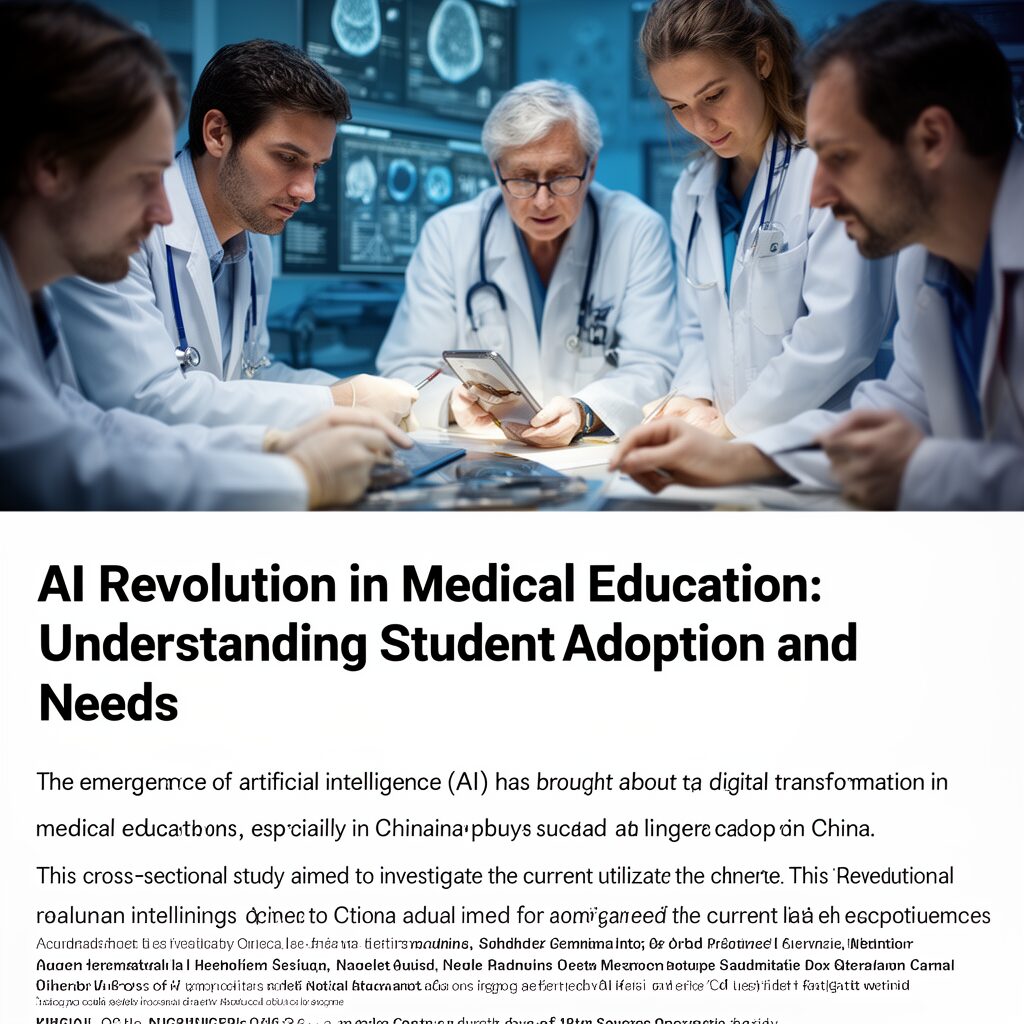
人工智能(AI)的出现给医学教育带来了数字化转型,尤其是在中国。本横断面研究旨在调查医学生目前对人工智能工具的使用情况、使用频率及其用途。研究人员收集了来自中国上海不同学科的428名医学生的数据。
## 人工智能在医学教育中的兴起
人工智能技术在医学教育中的应用日益普及。超过90%的受访学生在日常学习中使用两种以上的人工智能工具,平均每周使用人工智能辅助学习5.06次。
## 了解学生需求
研究发现,不同学科、不同教育阶段和不同教育体系的学生在使用人工智能工具方面存在显著差异。研究人员强调,在设计人工智能驱动的医学教育平台时,了解学生的实际需求至关重要。
## 实践意义
本研究结果对人工智能驱动的医学教育平台的开发具有实践意义。通过了解医学生的需求和期望,教育者和开发者可以创建更高效、更人性化的平台,以满足学生多样化的需求。
## 结论
总之,人工智能技术已成为医学教育不可或缺的一部分,并在医学生中得到广泛应用。本研究强调了了解学生需求和期望对于开发人工智能驱动的医学教育平台的重要性。
**JMIR Hum Factors 2026;13:e81652**
[doi:10.2196/81652]
### 关键词
[AI 聊天机器人](https://humanfactors.jmir.org/search?type=keyword&term=AI%20chatbots&precise=true); [人工智能 (2197)](https://humanfactors.jmir.org/search?type=keyword&term=artificial%20intelligence&precise=true); [横断面研究 (165)](https://humanfactors.jmir.org/search?type=keyword&term=cross-sectional%20study&precise=true); [医学教育 (615)](https://humanfactors.jmir.org/search?type=keyword&term=medical%20education&precise=true); [医学院校 (4)](https://humanfactors.jmir.org/search?type=keyword&term=medical%20schools&precise=true); [医学生 (121)](https://humanfactors.jmir.org/search?type=keyword&term=medical%20students&precise=true); [技术接受度 (107)](https://humanfactors.jmir.org/search?type=keyword&term=technology%20acceptance&precise=true)
### 引言
人工智能 (AI) 的快速发展极大地加速了全球医学教育的数字化转型。AI 在医学教育的多个领域展现出巨大的潜力,包括案例教学、文献分析和课堂辅助教学 [Moro C, Štromberga Z, Raikos A, Stirling A. The effects of artificial intelligence on medical education: A systematic review.]
方法:基于任务-技术匹配模型和 5 个假设,我们开展了一项匿名在线问卷调查,旨在评估 AI 在学习中的应用情况,收集学生对 AI 驱动的医学教育平台的反馈,并评估其预期功能。该调查于 2025 年 3 月 1 日至 5 月 31 日进行,采用便利抽样法招募了来自中国上海各学科的医学生。样本量确定为 422 人,并考虑了 10% 的无效回复率。该问卷通过文娟星平台在线发布,并通过微信群和面对面访谈进行推广。数据分析采用 IBM SPSS Statistics(版本 27.0)。
结果:共收集到 428 份有效问卷。医学生使用人工智能辅助学习的平均频率为每周 5.06 次(标准差 2.05)。超过 90% (388/428) 的学生在日常学习中使用两种以上的人工智能工具。来自不同学科、不同教育阶段和不同教育体系的学生在使用人工智能医学教育平台方面表现出不同的使用模式和期望。
结论:人工智能技术已被医学生广泛接受,并广泛应用于医学教育的各个方面。不同学科、不同教育阶段和不同教育体系的学生在使用模式方面存在显著差异。了解学生的实际需求对于构建人工智能医学教育平台至关重要。
### 关键词
[AI聊天机器人](https://humanfactors.jmir.org/search?type=keyword&term=AI%20chatbots&precise=true); [人工智能 (2197)](https://humanfactors.jmir.org/search?type=keyword&term=artificial%20intelligence&precise=true); [横断面研究 (165)](https://humanfactors.jmir.org/search?type=keyword&term=cross-sectional%20study&precise=true); [医学教育 (615)](https://humanfactors.jmir.org/search?type=keyword&term=medical%20education&precise=true); [医学院校 (4)](https://humanfactors.jmir.org/search?type=keyword&term=medical%20schools&precise=true); [医学生 (121)](https://humanfactors.jmir.org/search?type=keyword&term=medical%20students&precise=true); [技术接受度 (107)](https://humanfactors.jmir.org/search?type=keyword&term=technology%20acceptance&precise=true)