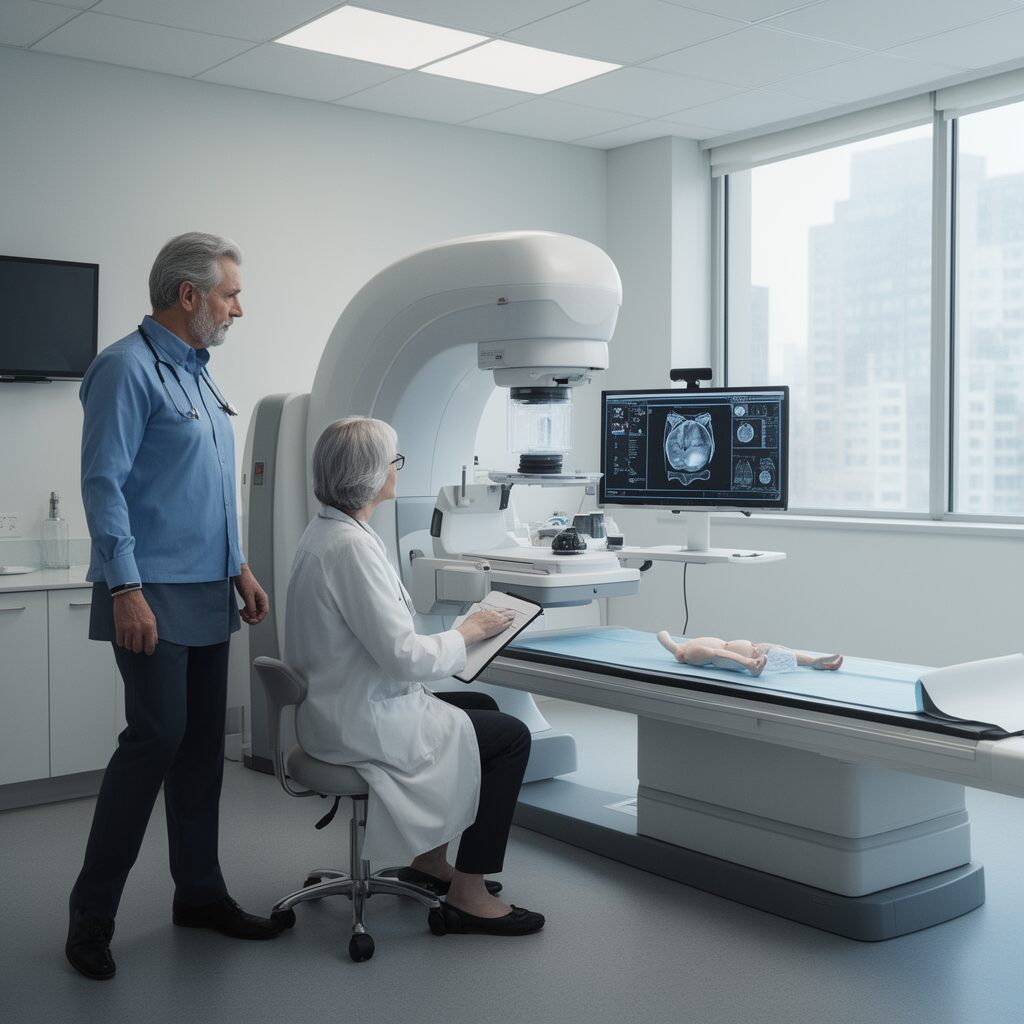
Imagine walking into a doctor’s office, knowing that the mammogram you’re about to undergo may be interpreted, in part, by a computer algorithm. This may seem daunting, but a recent study has found that most patients are actually comfortable with artificial intelligence (AI) being used to support mammogram interpretation.
While AI has been increasingly used in healthcare, there’s often a concern that patients may not be on board with this technological advancement. But the data suggests otherwise. According to a study published in Breast Cancer Research and Treatment, a whopping 74% of patients surveyed were okay with AI being used either on its own or as a second reader to help interpret their mammogram results.
## Understanding Patient Perceptions
The study, conducted by researchers at the University of Texas Southwestern Medical Center, surveyed 924 patients visiting safety-net and academic hospital breast imaging clinics. The researchers found that safety-net participants, who are often from lower-income backgrounds and may have limited access to healthcare, were less likely to accept AI use. However, when abnormalities were detected by radiologists, safety-net participants were more likely to request a reading by AI.
The researchers also found that patients with higher levels of education and those who reported having more knowledge about AI were more likely to accept its use. Interestingly, respondents of non-Hispanic Black race had lower acceptance of AI use, even when controlling for other factors.
## The Role of AI in Breast Imaging
So, what does this mean for the future of breast imaging? The lead author of the study suggests that as AI becomes increasingly used in this field, it’s essential to educate patients about its role, obtain their consent, and provide safeguards to protect their data privacy. This is especially important given the growing concern about data privacy.
The study’s findings also suggest that AI can be a valuable tool in breast imaging, particularly when it comes to detecting abnormalities. While AI may not be perfect, it can help radiologists make more accurate diagnoses, which can ultimately lead to better patient outcomes.
## The Future of AI in Healthcare
As AI continues to advance and become more integrated into healthcare, it’s essential to consider the potential benefits and drawbacks. By educating patients and providing them with the information they need, we can build trust and ensure that AI is used in a way that benefits everyone.
In the end, it’s all about finding a balance between technology and human intuition. By working together, we can create a healthcare system that’s both efficient and effective, and that puts patients at the forefront of every decision.
## Conclusion
The study’s findings are a welcome relief for those who have been skeptical about AI’s role in healthcare. While there are certainly challenges to be addressed, the data suggests that patients are comfortable with AI being used to support mammogram interpretation. As we move forward, it’s essential to continue educating patients and providing them with the information they need to make informed decisions about their care.
With AI on the rise, it’s time to rethink the way we approach breast imaging. By embracing this technology and working together, we can create a brighter future for patients and improve health outcomes everywhere.
## References
Abstract/Full Text (subscription or payment may be required)