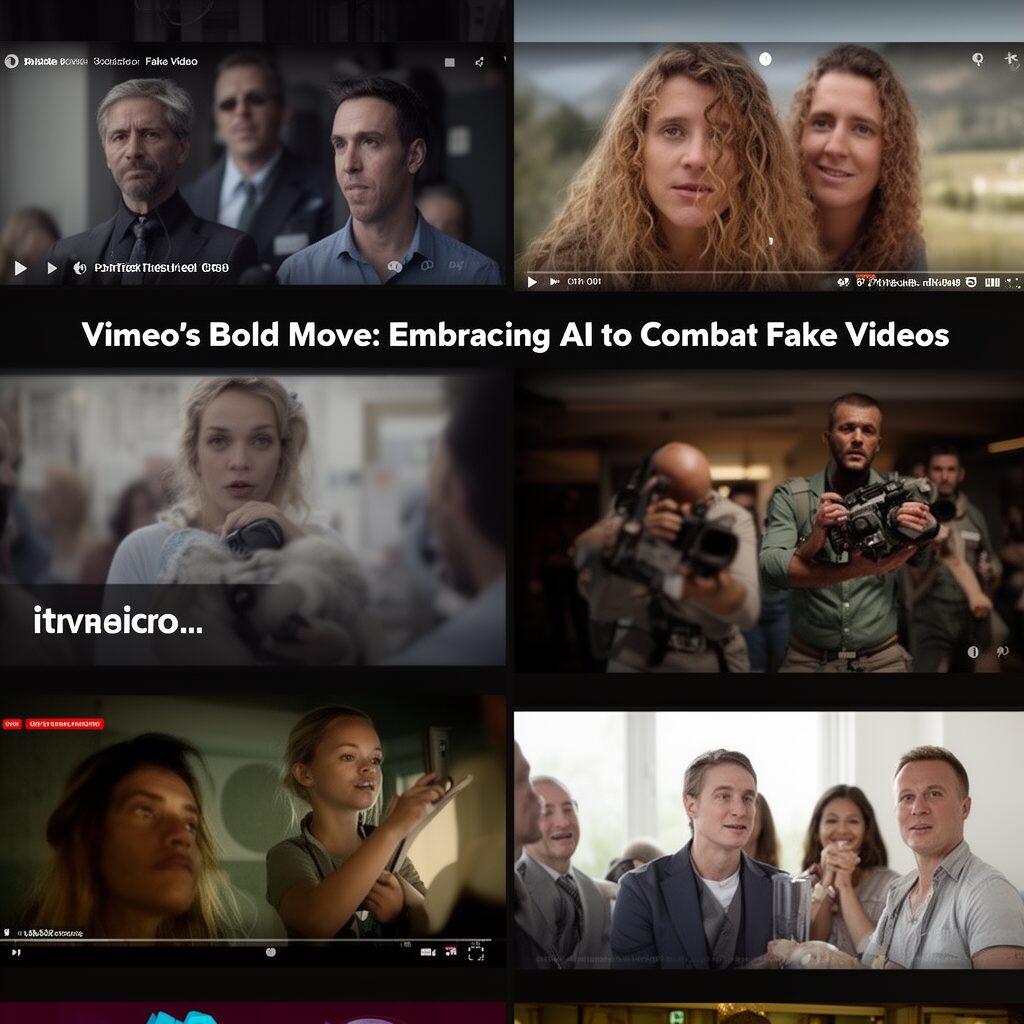
The internet is currently drowning in a sea of fake videos, leaving viewers confused and frustrated. In response, Vimeo is stepping up its game, focusing on authenticity and real content. Known as YouTube’s artist-friendly alternative, Vimeo is not just following the trend of generative AI; instead, it is harnessing artificial intelligence to enhance craftsmanship and creative control.
## A Visionary Leadership
At the helm of this transformation is Philip Moyer, Vimeo’s CEO, who joined the company in April 2024. With a rich background in artificial intelligence from his previous role at Google, Moyer is steering Vimeo toward a future where creators and viewers can trust the content they encounter. “We’re trying to make AI more useful to the creator and the viewer,” Moyer explains. His vision is clear: to cut through the noise and position Vimeo as a platform of trust.
Since Moyer took charge, Vimeo’s stock has seen a remarkable rise, from less than $4 to $7.85 per share in just over a year. This growth is not just a fluke; it reflects the hard work and innovation happening behind the scenes as Vimeo prepares for a potential acquisition by the Italian tech firm Bending Spoons.
## Redefining Video Search
One of the standout features introduced during Vimeo’s recent ‘Reframe’ event is the revolutionary “ask the library” tool. This innovative feature allows users to search through extensive video collections using everyday language. Moyer highlights, “Previously, the only way to find out what’s inside a video was to watch it end-to-end. Now, educators can summarize content quickly, and marketers can easily locate specific moments like old logos or even expressions of emotions.”
The engineering behind this functionality is complex, as video content is a blend of images, sounds, and emotions. Vimeo has developed a model that processes these elements simultaneously, giving it a profound understanding of the content within each frame. Moyer notes, “We have this really deep understanding of what’s going on inside the frames, the sounds, even the unspoken dialogue.”
## Empowering Creators
While Vimeo is not competing directly with generative AI models like OpenAI’s Sora, it is enhancing its compatibility with them. Users can link their Vimeo libraries to AI assistants like ChatGPT, allowing for instant retrieval of specific clips just by phrasing a question. This democratization of video access is a game changer, giving all creators a fair chance to showcase their work.
Unlike platforms like YouTube, where creators often lose control over their content, Vimeo prioritizes ownership. Moyer emphasizes, “In a world where there’s too much information, companies want to control the experience of their customers.” This is particularly vital for brands, as it ensures that their messages are not diluted by competing ads or distracting algorithms.
For instance, consider Michaels, a prominent craft store that has transitioned its tutorials from ad-supported platforms to Vimeo. This strategic move allows them to maintain a focused experience for learners — no interruptions from competing ads, just pure, uninterrupted content designed to educate and inspire.
## The Future of Video
Moyer’s vision for Vimeo is not just about immediate gains; it’s about establishing a lasting legacy in the rapidly evolving digital landscape. With predictions that the internet will host nearly 38 zettabytes of data by 2025, and that video will constitute a staggering 80% of that, the need for clarity and trust in video content has never been more critical.
As Moyer puts it, “We were trusted 20 years ago to hold creators and their authentic content. That’s what we want to do in this new era.” By leveraging AI to restore clarity and enhance the viewer experience, Vimeo is positioning itself as a leader in the fight against the flood of misinformation and low-quality content.
In summary, Vimeo’s commitment to authenticity and creator empowerment is paving the way for a new era in video sharing. As the platform continues to innovate and adapt to the challenges of the digital age, it stands out as a beacon of trust in an increasingly crowded marketplace.