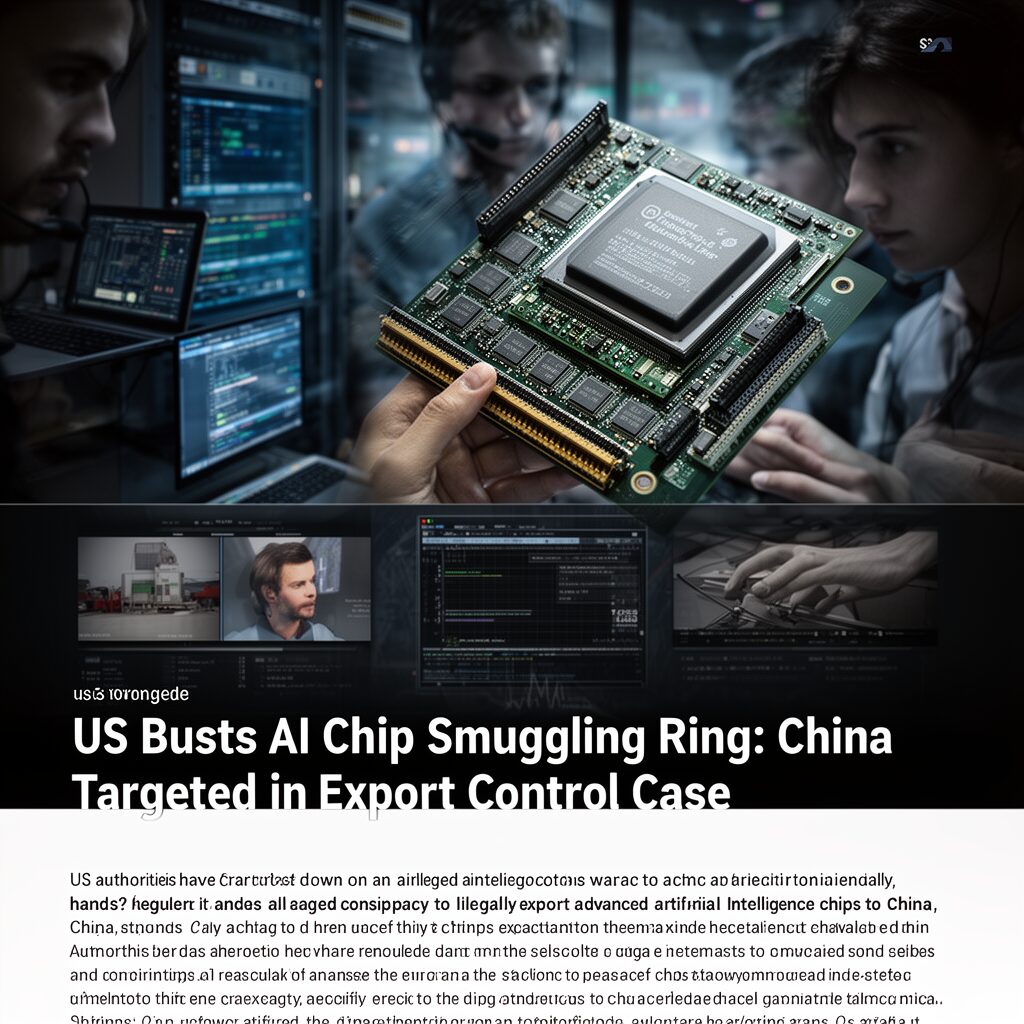
Are cutting-edge AI chips finding their way into the wrong hands? US authorities have cracked down on an alleged conspiracy to illegally export advanced artificial intelligence chips to China, highlighting the ongoing battle to control the flow of sensitive technology. Four individuals – two American citizens and two Chinese nationals – are facing charges for allegedly using shell companies and deceptive tactics to evade export controls.
These controls are designed to prevent China from acquiring advanced technology that could be used for military modernization, a key concern for US national security officials. The Justice Department’s announcement underscores the seriousness with which the US is taking these violations. So, what exactly went down?
## The Alleged Smuggling Operation
The indictment paints a picture of a carefully orchestrated scheme. The accused allegedly used a Tampa-based company as a front to purchase controlled GPUs (Graphics Processing Units), which are essential for AI development. One defendant even allegedly funneled chips through his own electronics company in Alabama. The conspirators allegedly falsified paperwork and misled US authorities about the intended destination of the chips.
John Eisenberg, Assistant Attorney General for National Security, stated that the indictment alleges a “deliberate and deceptive effort to transship controlled NVIDIA GPUs to China.” He emphasized the National Security Division’s commitment to disrupting black markets for sensitive US technologies.
## Millions in Funds, Hundreds of GPUs
Between October 2024 and January 2025, the conspiracy allegedly resulted in the export of 400 NVIDIA A100 GPUs to China. Law enforcement intervened to disrupt further attempts to export advanced supercomputers and additional GPUs. The alleged conspirators received over $3.89 million in wire transfers from China to finance their activities. This case is a stark reminder of the lengths to which some parties will go to acquire restricted technology. It also highlights the challenges of enforcing export controls in a globalized world. The defendants face potentially lengthy prison sentences if convicted, including up to 20 years for export control violations and money laundering.