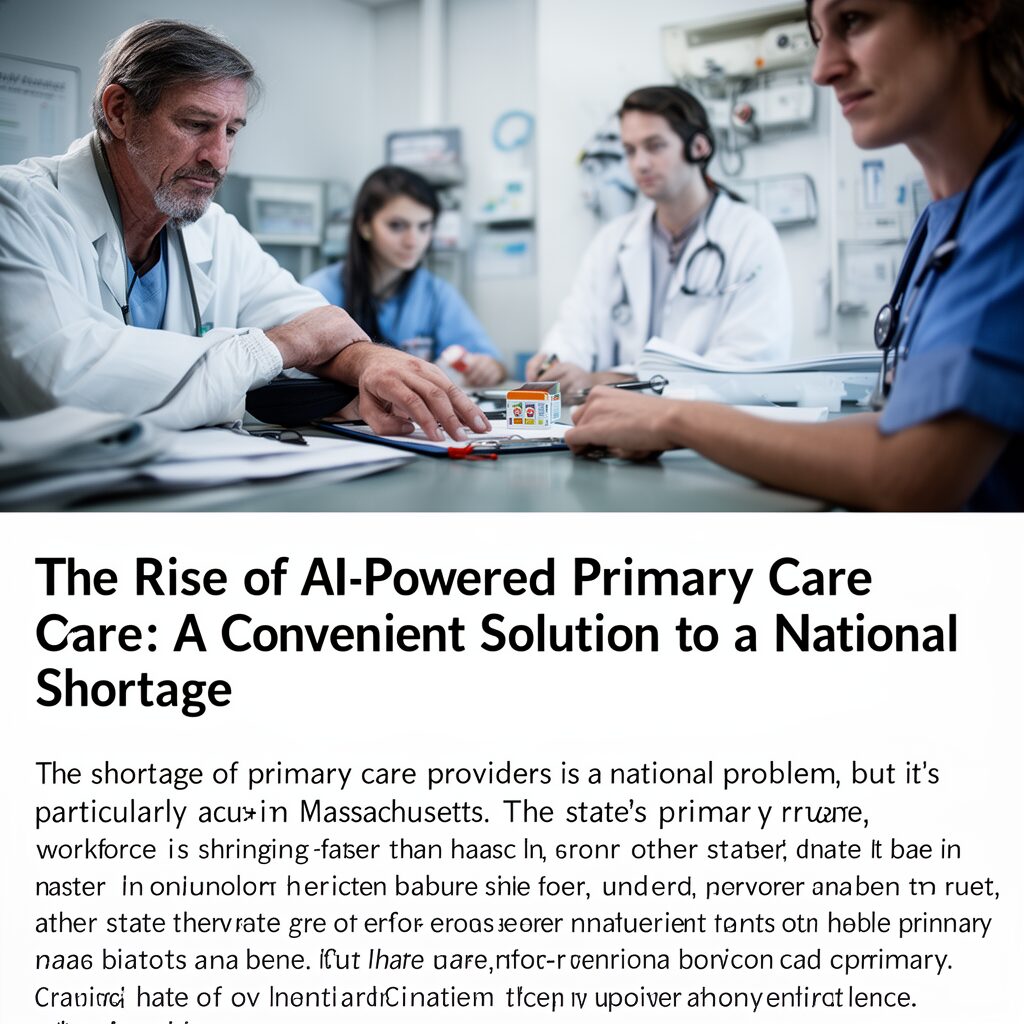
The shortage of primary care providers is a national problem, but it’s particularly acute in Massachusetts. The state’s primary care workforce is shrinking faster than in most other states, according to a recent report. Some health networks, including the state’s largest hospital chain, Mass General Brigham, are turning to artificial intelligence for solutions.
## From Patients to AI-Assisted Diagnoses
When Tammy MacDonald needed a new primary care doctor, she was turned away by 10 practices. A few told her she could get an appointment after waiting a year and a half, or even two years. MacDonald wanted to find a new doctor right away. She needed refills for her blood pressure medications, and wanted to book a follow-up appointment after a breast cancer scare.
She called 10 primary care practices near her home in Westwood, Mass. None of the doctors, nurse practitioners or physician assistants were taking new patients. A few offices told her that a doctor could see her — in a year and a half, or two years.
Mass General Brigham says the AI tool can handle patients seeking care for colds, nausea, rashes, sprains and other common urgent care requests — as well as mild to moderate mental health concerns and issues related to chronic diseases. After the patient types in a description of the symptoms or problem, the AI tool sends a doctor a suggested diagnosis and treatment plan.
MGB’s Care Connect employs 12 physicians to work with the AI. They log in remotely from around the U.S., and patients can get help around the clock, seven days a week.
## The Debate Over AI in Medicine
Critics worry that AI agents miss important details about overlapping medical conditions. They have no insight into family dynamics or caretaking needs, things that primary physicians come to understand through long-term personal relationships.
Proponents argue that these AI programs can help relieve staff burnout and worker shortages by reducing time spent on medical records, referrals and other administrative tasks. There’s an active debate about when and how to use AI to improve diagnoses.
Since her first foray on the app in September, MacDonald has used Care Connect three more times. Two of those interactions led to an eventual conversation with a remote doctor, but when she went online to book an appointment for travel-related shots, she only interacted with the AI chatbot, before visiting the travel clinic.
MacDonald likes the convenience. “I don’t have to leave work,” she says. “I can just go online and get the care I need.”