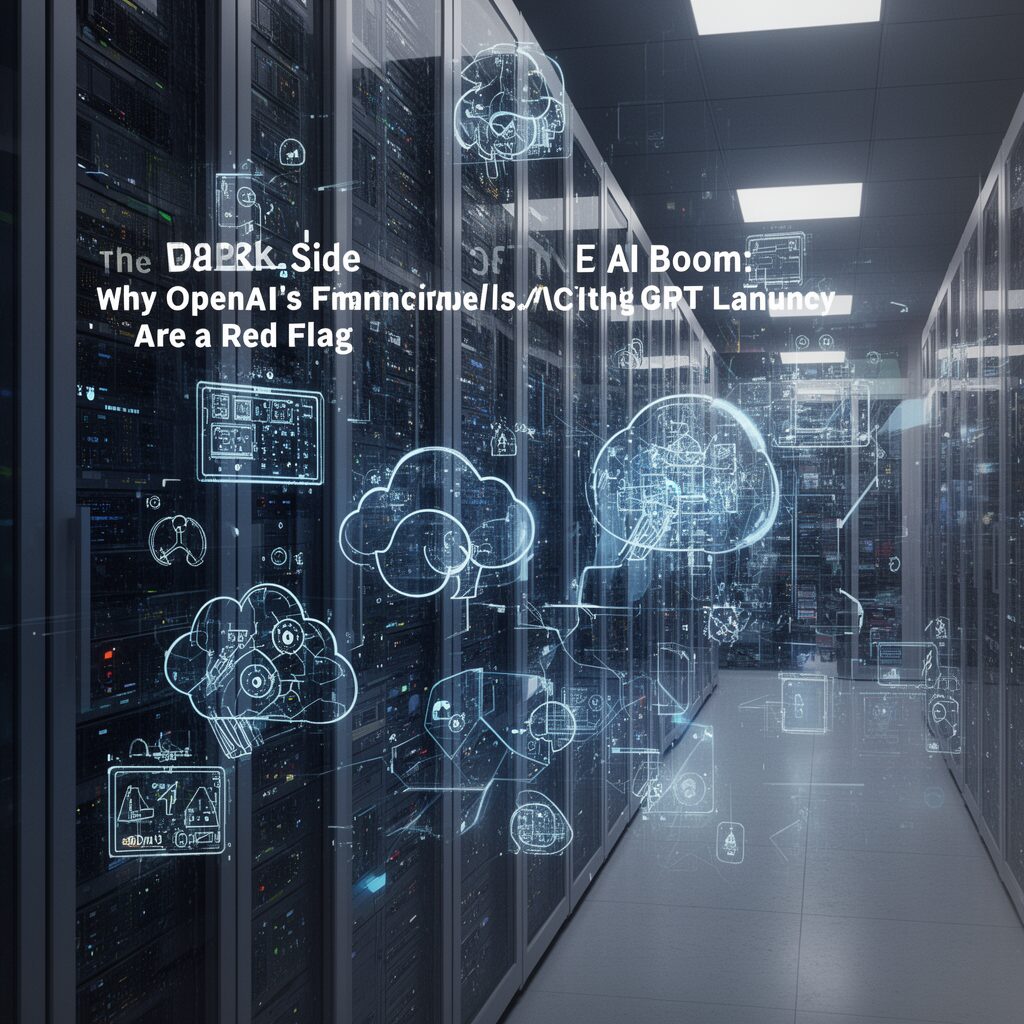
The AI industry has been on a wild ride since the launch of ChatGPT three years ago. With soaring valuations, tens of billions of dollars invested in data center infrastructure, and a frenzy of innovation, it’s easy to get caught up in the hype. However, beneath the surface, warning signs are emerging that the AI boom may be unsustainable.
## The Unseen Costs of AI
One of the key differences between OpenAI and its competitors like Google is that the latter can tap into existing revenue sources to fund its AI research. OpenAI, on the other hand, has raised record amounts of cash and has vowed to spend over $1 trillion by the end of the decade without any guaranteed returns.
The company’s recent decision to introduce ads into ChatGPT may be a bid to shift the reality of its financial situation. But the gap between the AI industry’s promises and reality has never been wider, and the enormous gulf between AI company valuations and their lagging revenues is a major concern.
Former Fidelity manager George Noble has been warning about the risks of OpenAI’s business model for months. In a recent tweet, he noted that the company is ‘falling apart in real-time’ and pointed out that OpenAI is reportedly losing $12 billion per quarter.
## The Diminishing Returns of AI
Noble also cast doubt on the AI industry’s ability to scale up operations to meet demand, an immensely costly enterprise that’s bound to become even more expensive as AI models demand more power. The former asset management boss predicted that the AI hype cycle is peaking and that diminishing returns are becoming impossible to hide.
He also pointed out that the low-hanging fruit is gone, and every incremental improvement now requires exponentially more compute, more data centers, more power. As a result, he advised investors to stay away from OpenAI, arguing that the risk profile is astronomical.
## The Warning Signs Are Clear
Noble’s comments come a week after Sebastian Mallaby, senior fellow at the Council on Foreign Relations, predicted that OpenAI could run out of money within the next 18 months. While Noble’s position is more bearish, both experts are warning about the unsustainable nature of OpenAI’s business model.
The company’s CEO, Sam Altman, has been under fire for his handling of the company’s finances, and Noble’s comments have sparked a wave of concern among investors. As the Wall Street Journal reported, Altman declared a ‘code red’ last year, urging staffers to focus on improving ChatGPT, even at the cost of delaying other projects.
In a follow-up tweet, Noble made it clear that he isn’t holding back. ‘Just say no to scam Altman,’ he wrote. ‘OpenAI is a cash incinerator, the product is losses for investors.’
The warning signs are clear: the AI boom may be unsustainable, and OpenAI’s financials are a major red flag. As investors, it’s time to take a step back and reassess the risks involved in this high-stakes game.