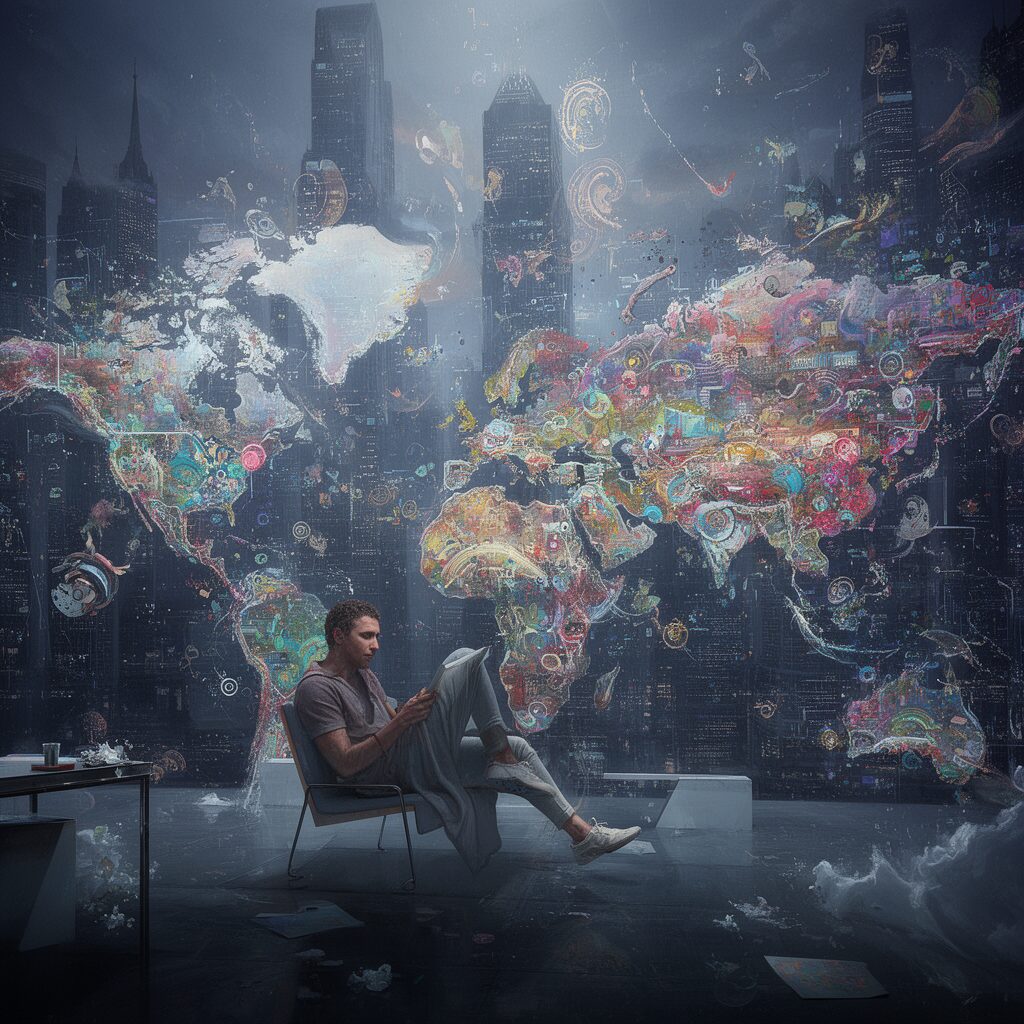
Imagine a world where a single photo or digital artwork can be replicated with ease, thanks to the advancements in AI technology. This phenomenon has been sweeping social media platforms, including Instagram, where the head of the app, Adam Mosseri, has acknowledged that authenticity will soon become a major issue. In his recent post, Mosseri suggests that AI-generated content will become so prevalent that it will be more practical to signpost real media instead of trying to identify the fake ones.
## The Rise of AI Slop
The term ‘AI slop’ refers to the glitchy, hyper-realistic, and often tacky appearance of AI-generated content. While it’s not hard to spot at first, AI models are quickly becoming better at imitating less-than-perfect styles, making it increasingly difficult to distinguish between real and fake.
## The Buck Passes to Creatives
Mosseri seems to be passing the buck to creatives, suggesting that it’s up to them to prove their work is real. With the help of camera manufacturers and software developers, it’s already possible to verify the authenticity of images and digital artworks. However, for this to work, social media platforms like Instagram need to be able to read this data.
## Get Creative with Imperfection
So, what can creatives do in the meantime? Adam Mosseri’s suggestion is to make things uglier – imperfection becomes a signal of authenticity in a world where everything can be perfected. This means leaning into unproduced and unflattering images of oneself, embracing a raw aesthetic that says: ‘this is real because it’s imperfect’.
## The Future of Instagram
The clever Instagram layouts we raved about back in 2018 are now irrelevant. Instead, creatives have a couple of options: stop worrying about Instagram or start sharing behind-the-scenes videos and works in progress. Many creatives have already switched to this approach, showing processes and content that says something about them as artists. By doing so, they’re proving that their work is real and that they made it.
## The Disposable Artist?
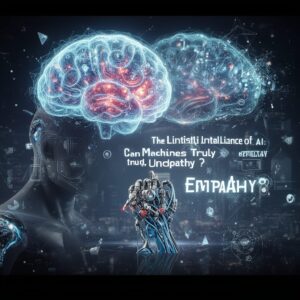
As AI-generated content becomes more prevalent, we’re left wondering: are we in the era of the disposable artist? Can AI replicate empathy, and if so, what does this mean for the art world? Only time will tell, but one thing’s for sure – creatives will have to get used to proving they’re real.