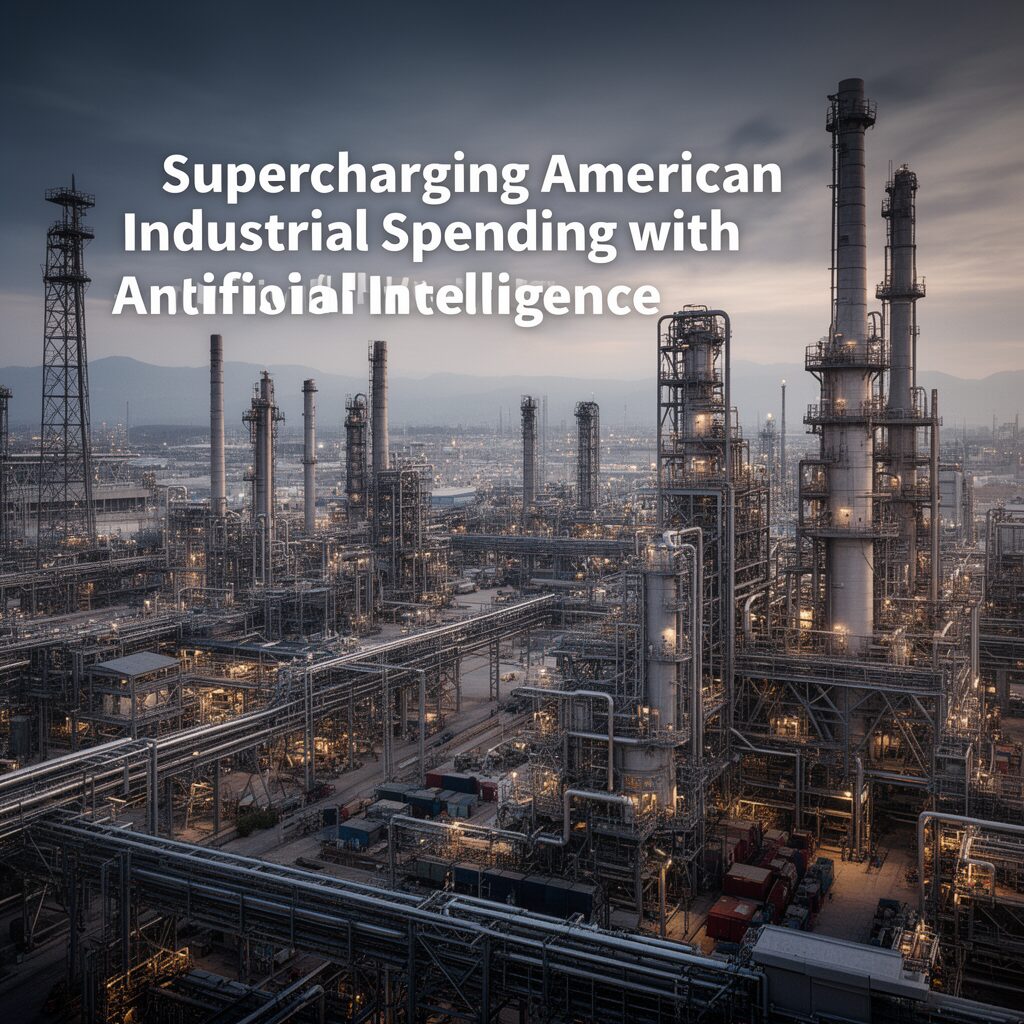
We could very well be entering an unprecedented era of U.S. domestic business spending and investment in the years to come. Recently, the Alger team took a close look at the U.S. Private Nonresidential Fixed Investment (PNFI) numbers. PNFI represents business spending on productive assets such as structures (e.g., factories, data centers), intellectual property (e.g., software and R&D), and equipment (e.g., GPUs, servers).
The above chart shows how announced PNFI has skyrocketed last year, reaching $8.8 trillion as of September 2025. This represents a staggering leap from PNFI numbers from years prior, and raises optimism for future domestic spending down the line. Ramped up PNFI spending shouldn’t necessarily come as a surprise, either. A number of different factors are driving companies of all kinds to consider amplifying PNFI spending.
For instance, ongoing tariff tensions are leading many companies to rethink how their supply chains are calibrated, encouraging domestic spending and production. Domestic production could further be amplified by favorable federal policies, along with ongoing rate cuts from the Federal Reserve. Furthermore, the ongoing surge of artificial intelligence (AI) adoption and innovation is continuing to create more demand for infrastructure. AI PNFI spending can help supplement power needs, fabricate necessary parts, and fund research & development.
This can provide advisors and investors with an interesting route to capitalize on the opportunities from rising PNFI spending. Gaining targeted exposure to companies enabling AI adoption can give portfolios a new way to benefit from strengthened AI infrastructure, intellectual property development, and manufacturing.
## ALAI Offers a Distinct Approach to AI Investing
Alger believes that, true to its name, the Alger AI Enablers & Adopters ETF (ALAI) A- can help advisors and investors gain access to these kinds of companies within the ETF wrapper. ALAI looks for compelling stocks in the field of AI adoption, development, and utilization through bottom-up, fundamental research.
ALAI invests in Enablers, which are companies developing the components for and investing in AI infrastructure, and Adopters, which are companies that are successfully integrating AI technologies into their businesses to enhance their products or services or improve productivity.
For more news, information, and analysis, visit the Artificial Intelligence Content Hub.
**Disclosure Information**
Click here for more information on the Alger AI Enablers & Adopters ETF.
The views expressed are the views of Fred Alger Management, LLC (“FAM”) and its affiliates as of January 2026. These views are subject to change at any time and may not represent the views of all portfolio management teams. These views should not be interpreted as a guarantee of the future performance of the markets, any security or any funds managed by FAM. These views are not meant to provide investment advice and should not be considered a recommendation to purchase or sell securities. Holdings and sector allocations are subject to change. Past performance is not indicative of future performance.
Risk Disclosures: Investing in the stock market involves risks, including the potential loss of principal. Growth stocks may be more volatile than other stocks as their prices tend to be higher in relation to their companies’ earnings and may be more sensitive to market, political, and economic developments. Companies involved in, or exposed to, AI-related businesses may have limited product lines, markets, financial resources or personnel as they face intense competition and potentially rapid product obsolescence, and many depend significantly on retaining and growing their consumer base. These companies may be substantially exposed to the market and business risks of other industries or sectors, and may be adversely affected by negative developments impacting those companies, industries or sectors, as well as by loss or impairment of intellectual property rights or misappropriation of their technology. Companies that utilize AI could face reputational harm, competitive harm, and legal liability, and/or an adverse effect on business operations as content, analyses, or recommendations that AI applications produce may be deficient, inaccurate, biased, misleading or incomplete, may lead to errors, and may be used in negligent or criminal ways. AI technology could face increasing regulatory scrutiny in the future, which may limit the development of this technology and impede the future growth. AI companies, especially smaller companies, tend to be more volatile than companies that do not rely heavily on technology. A significant portion of assets will be concentrated in securities in related industries, and may be similarly affected by adverse developments and price movements in such industries. A significant portion of assets may be invested in securities of companies in related sectors, and may be similarly affected by economic, political, or market events and conditions and may be more vulnerable to unfavorable sector developments. Investing in companies of small and medium capitalizations involves the risk that such issuers may have limited product lines or financial resources, lack management depth, or have limited liquidity.