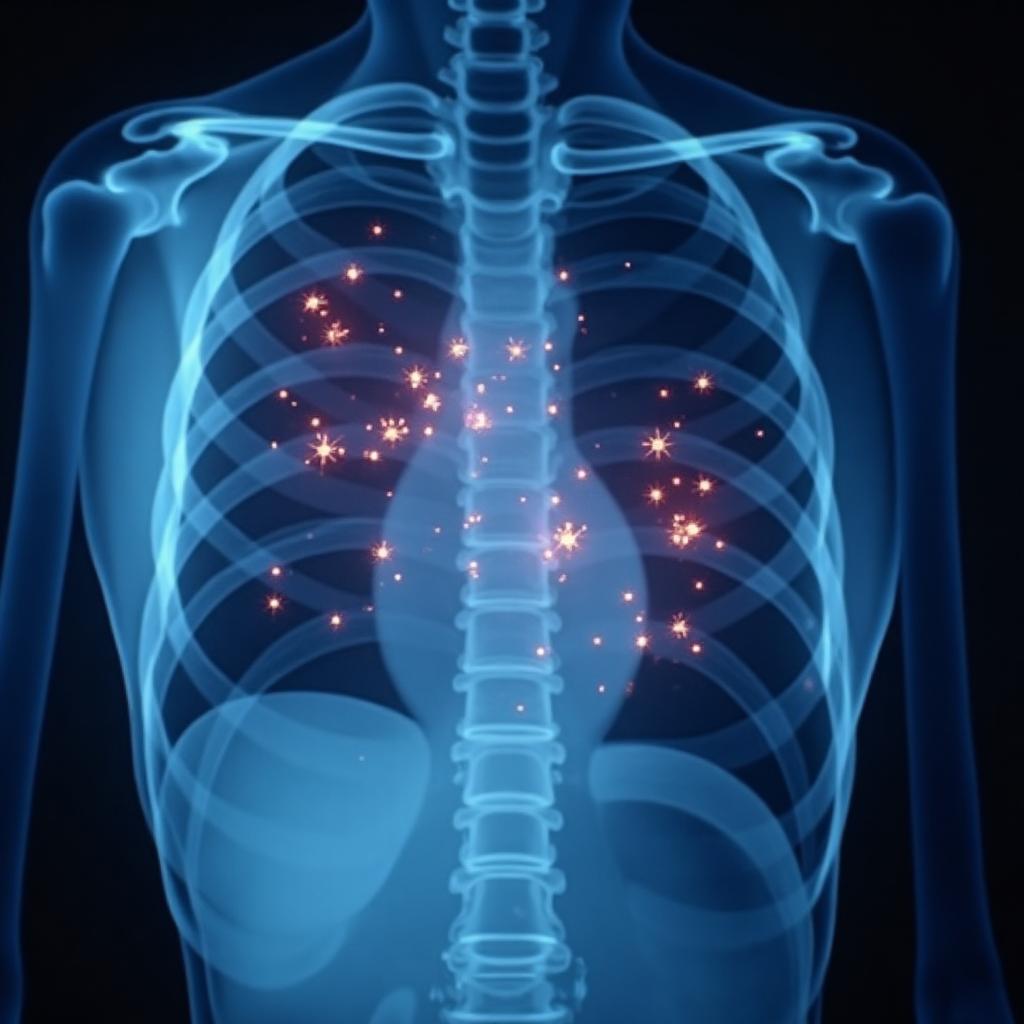
Imagine a world where medical professionals can diagnose breast cancer with greater accuracy, faster and more efficiently. Sounds like science fiction, right? But what if I told you that this is now a reality, thanks to the latest advancements in artificial intelligence (AI)? A recent study published in The Lancet highlights the potential of AI in revolutionizing radiology and improving breast cancer screening outcomes.
## The Power of AI in Radiology
In a bid to optimize radiology workflow and performance, researchers have been exploring the role of AI in medical imaging. And it’s clear that the results are promising. A randomized trial conducted in Sweden involving over 100,000 women has shown that AI-supported mammography screening can significantly enhance cancer detection rates and reduce workload for radiologists.
According to Eric Topol, Founder and Director of Scripps Research Translational Institute, this study is a game-changer. “The largest randomized trial of medical AI,” he exclaimed. “Over 100,000 women in Sweden, Radiologist + AI vs 2 radiologists, in follow-up AI added led to 29% more cancer detected, 44% reduced workload, and Less cancer dx in subsequent 2 years, and, when found, less aggressive.” The implications are vast, and the potential benefits for patients, healthcare systems, and medical professionals are immense.
## Bridging the Gap in Health Equity
But what about the impact on underserved or resource-limited regions? Unfortunately, these areas often face significant challenges when it comes to breast cancer screening. Staffing shortages and limited resources can compromise the quality of care, leading to delayed diagnoses and suboptimal outcomes. AI-augmented radiology can help bridge this gap, providing a much-needed boost to healthcare systems in these regions.
The study’s findings are nothing short of remarkable. AI-supported mammography screening led to a 29% increase in cancer detection rates, reducing the workload for radiologists by 44%. Moreover, the study revealed that AI-assisted screening resulted in fewer aggressive cancers being diagnosed in the subsequent two years. These results have significant implications for healthcare policy and practice, paving the way for more efficient and effective breast cancer screening programs.
## The Future of Radiology
As the medical field continues to evolve, it’s clear that AI will play an increasingly important role in shaping the future of radiology. By automating routine tasks and enhancing diagnostic accuracy, AI can free up radiologists to focus on more complex cases, improving patient outcomes and streamlining healthcare processes. It’s an exciting time for medical professionals, patients, and healthcare systems alike.
In conclusion, the potential of AI in radiology is vast and exciting. By harnessing the power of machine learning and artificial intelligence, we can revolutionize breast cancer screening and improve patient outcomes. It’s an opportunity we cannot afford to miss, and I firmly believe that AI will play a critical role in shaping the future of healthcare. As we move forward, let’s continue to innovate, collaborate, and push the boundaries of what’s possible in medical imaging.
## What’s Next?
The study’s findings have significant implications for healthcare policy and practice. As we move forward, it will be essential to explore ways to integrate AI-supported mammography screening into existing breast cancer screening programs. This may involve collaborating with healthcare systems, medical professionals, and patients to develop more efficient and effective screening protocols.
By working together, we can harness the power of AI to improve breast cancer screening outcomes, reduce healthcare disparities, and create a more equitable healthcare system for all. The future of radiology is bright, and I’m excited to see the impact that AI will have on this critical field.
The study, titled “Interval cancer, sensitivity, and specificity comparing AI-supported mammography screening with standard double reading without AI in the MASAI study: a randomised, controlled, non-inferiority, single-blinded, population-based, screening-accuracy trial,” has been published in The Lancet.
For more information on this study and the latest advancements in medical imaging, be sure to check out the links below.
Read The Full Article on The Lancet
More posts featuring Eric Topol and Liam (Alireza) Ghiam on OncoDaily.