Imagine a world where heart disease treatment is no longer a guessing game. Where doctors can pinpoint the exact cause of a patient’s heart condition and prescribe a treatment that’s tailored to their specific needs. Welcome to the future of cardiology, where artificial intelligence (AI) and cardiac imaging are revolutionizing the way we diagnose and treat heart disease.
## The Limitations of Current Treatments
Current treatments for heart disease are often a trial-and-error process. Doctors may prescribe medication or recommend lifestyle changes, but it’s not always clear whether these treatments will be effective. This can lead to frustration for patients and their families, who may feel like they’re not getting the best possible care.
## The Power of AI-Powered Cardiac Imaging
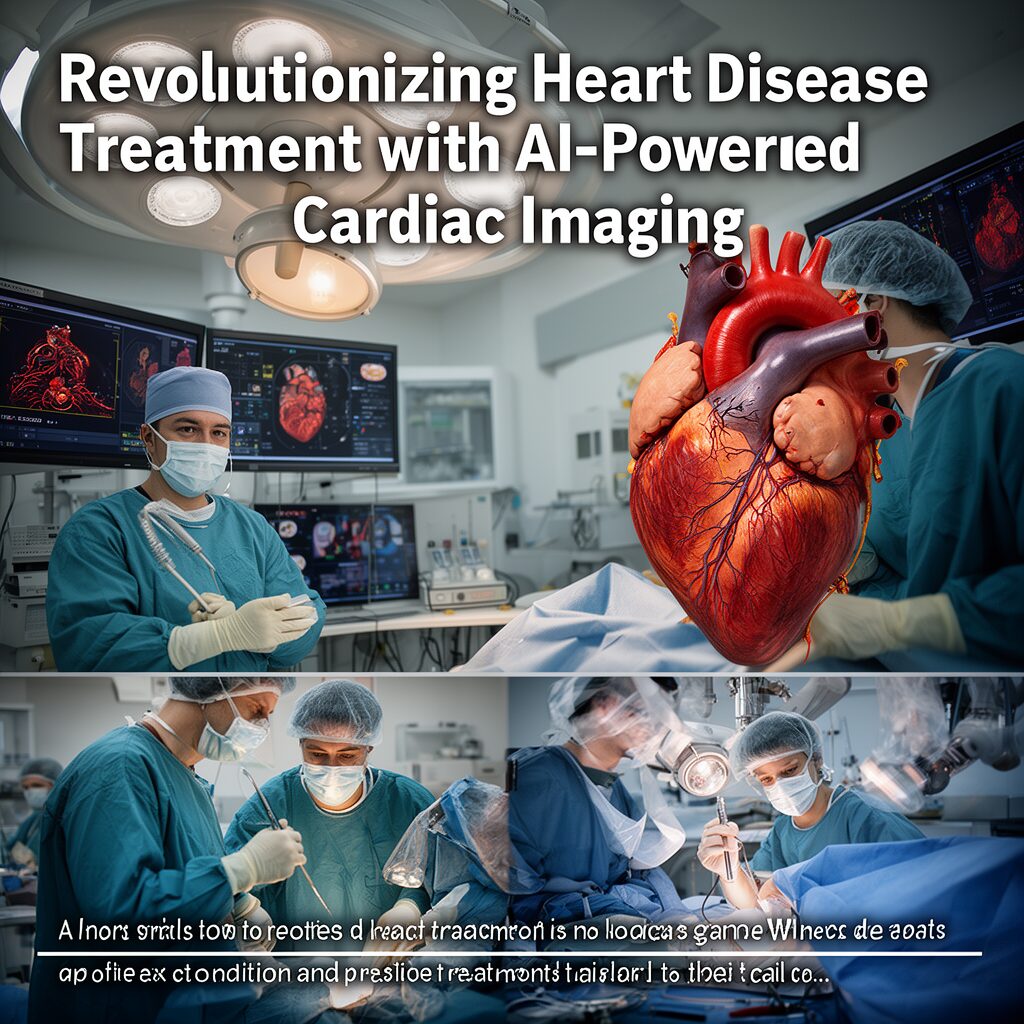
Researchers at the Computational Cardiac Imaging Group at the MRC Laboratory of Medical Sciences in London have developed a new method that uses AI-powered cardiac imaging to predict treatment opportunities for heart disease. The method, called CardioKG, combines detailed heart structure and function from medical images with a biological knowledge graph to identify potential treatments.
By integrating imaging data with knowledge graphs, CardioKG can capture patient-level variation in how disease affects the heart, allowing doctors to identify the most effective treatments for individual patients. The researchers used a dataset of 4,280 patients with atrial fibrillation, heart attack, or heart failure, as well as 5,304 healthy participants, to build the model.
## The Results
The findings of the study are promising, with the researchers identifying new disease-associated genes and predicting several potential drug repurposing opportunities. Among these were methotrexate, a drug commonly used to treat rheumatoid arthritis, as a candidate for heart failure, and gliptins, used in diabetes, as potential treatments for atrial fibrillation.
## The Future of Cardiology
The implications of this study are vast, with the potential to revolutionize the way we diagnose and treat heart disease. By quickly identifying high-priority genes and candidate drugs, imaging-enhanced knowledge graphs could guide pharmaceutical development and allow for more targeted clinical trials. Data from this study also showed that predicted drug repurposing for heart failure could improve patient survival.
## Conclusion
The future of cardiology is looking bright, thanks to the advancements in AI-powered cardiac imaging. With CardioKG, doctors can now pinpoint the exact cause of a patient’s heart condition and prescribe a treatment that’s tailored to their specific needs. This is a game-changer for patients and their families, who will now have access to more effective treatments and improved survival rates.
The researchers are now planning to further refine their approach using CardioKG, with plans to extend the knowledge graph into a dynamic, patient-centered framework that captures real disease trajectories. They also hope to include more diverse imaging datasets and apply the same approach to other areas of the body, such as the brain and body fat.