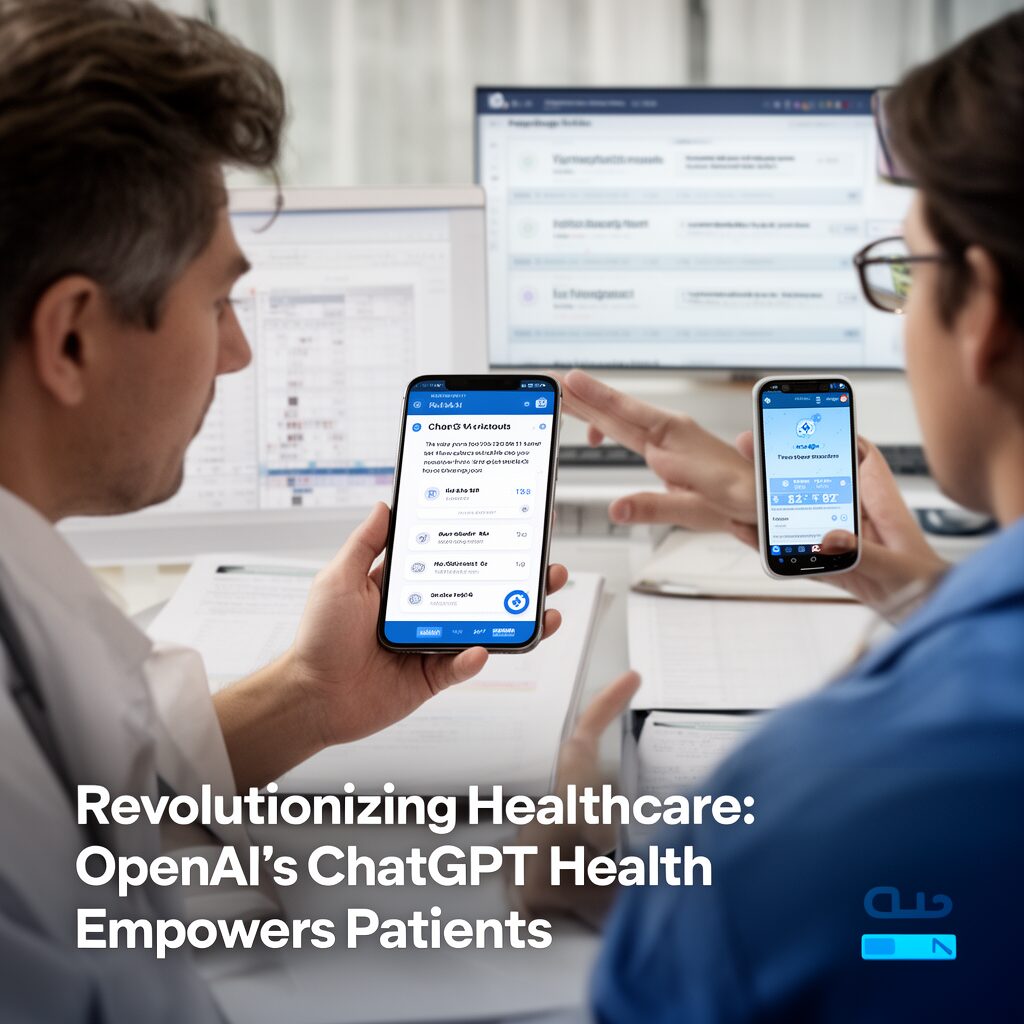
Imagine having a personal health assistant that can walk you through your latest test results, help you prepare for doctor’s appointments, and even compare health plan options. That’s exactly what OpenAI’s new ChatGPT Health is offering, and it’s set to revolutionize the way we interact with our healthcare systems.
## A Growing Need for Health Information
More than 40 million people turn to ChatGPT daily for health-related questions, including navigating the complex healthcare system and understanding their insurance. This is not surprising, given the challenges many Americans face when it comes to accessing healthcare. From cost concerns to long travel times to rural areas, it’s no wonder that people are turning to chatbots for help.
## ChatGPT Health: A New Era in Healthcare
ChatGPT Health is designed to put users in control of their health information. By connecting their medical records and wellness apps, users can access a wealth of information that’s tailored to their specific needs. Whether they need to understand their test results, create workout routines, or compare health plan options, ChatGPT Health is there to help.
But how does it work? According to OpenAI, users can connect their medical records and wellness apps, such as Apple Health and MyFitnessPal, to access their health information. This information is then used to provide personalized guidance and recommendations. But what’s truly innovative about ChatGPT Health is its commitment to privacy. All health-related conversations are stored separately from other conversations with ChatGPT, and data is encrypted for added security.
## The Risks and Rewards of AI in Healthcare
While ChatGPT Health is an exciting development, there are also risks associated with using AI in healthcare. The tools can ‘hallucinate,’ offering inaccurate or misleading information that patients may struggle to recognize. To mitigate this risk, OpenAI has worked with physicians to develop and run health-specific evaluations of ChatGPT Health. Over 260 doctors have collaborated with OpenAI to create HealthBench, a framework that evaluates the chatbot’s answers for safety, clarity, and follow-up care.
New GPT models are also more accurate and reliable compared to older models, as they’re more likely to ask follow-up questions, browse the internet for the latest research, and direct users to professional evaluation. However, it’s essential to remember that ChatGPT Health is not a replacement for medical care. It’s designed to ask everyday questions and help users understand patterns in their health over time.
## The Future of Healthcare
As we move forward, it’s clear that AI is going to play an increasingly important role in healthcare. With ChatGPT Health, OpenAI is taking a significant step towards empowering patients and revolutionizing the way we interact with our healthcare systems. While there are risks associated with AI in healthcare, the rewards are clear. By providing personalized guidance and recommendations, ChatGPT Health has the potential to improve health outcomes and make healthcare more accessible to all.
The future of healthcare is exciting, and it’s clear that OpenAI is at the forefront of innovation. With ChatGPT Health, patients are now empowered to take control of their health information and make informed decisions about their care. It’s a new era in healthcare, and it’s one that we can’t wait to see unfold.