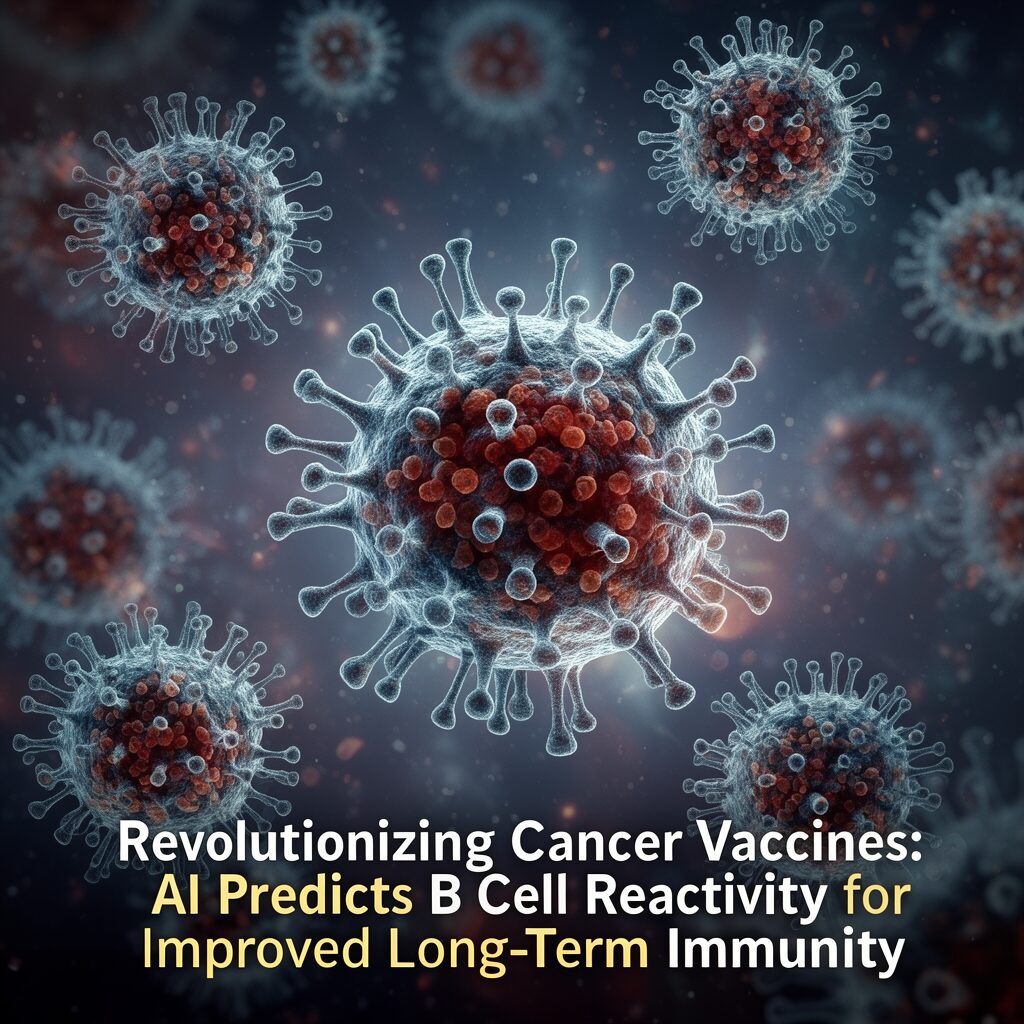
Imagine a future where cancer vaccines not only attack cancer cells but also remember them, ensuring long-term immunity and preventing recurrence. That future is closer than we think, thanks to a groundbreaking AI model developed by Professor Jung Kyoon Choi’s research team at the Korea Advanced Institute of Science and Technology (KAIST). This innovative technology has the potential to revolutionize the field of cancer immunotherapy.
In a typical cancer vaccine, the immune system is trained to recognize and attack cancer cells, but this approach has limitations. It’s like trying to hit a moving target – the immune system can only respond once, and the memory of the cancer cells is short-lived. However, B cells, a type of immune cell, play a crucial role in cancer immunity. They can ‘remember’ cancer cells and mount a long-term response. By integrating B cell reactivity into cancer vaccines, researchers can create a more effective and sustainable immune response.
## The Power of AI in Cancer Vaccines
The KAIST team’s AI model predicts B cell reactivity to neoantigens – unique markers that distinguish cancer cells. Neoantigens are proteins derived from cancer cell mutations, and they possess cancer-cell specificity. By identifying these markers, the AI model can help design personalized cancer vaccines that target the specific mutations in each individual’s cancer. This approach is more effective than traditional cancer vaccines, which often rely on general markers that may not be specific to the patient’s cancer.
## Overcoming Existing Limitations
Current cancer vaccine technology focuses primarily on T cell-centered immune responses, which is a limitation. T cells are an essential part of the immune system, but they have limitations when it comes to long-term memory. B cells, on the other hand, have the ability to ‘remember’ cancer cells and mount a sustained immune response. The KAIST team’s AI model overcomes this limitation by learning the structural binding characteristics between mutant proteins and B cell receptors (BCR) to predict B cell reactivity. This enables the design of more effective cancer vaccines that integrate B cell responses.
## Clinical Implications and Future Directions
The clinical implications of this research are significant. By integrating B cell responses into cancer vaccines, researchers can create a more effective and sustainable immune response. This approach has the potential to revolutionize the field of cancer immunotherapy and improve patient outcomes. The KAIST team is currently conducting pre-clinical development of a personalized cancer vaccine platform and preparing to submit an FDA IND with the goal of entering clinical trials in 2027. The future of cancer vaccines looks bright, and it’s thanks to the innovative work of researchers like Professor Jung Kyoon Choi and his team.
The GIST (Get Informed, Stay Informed, Tell Others)
This article has been reviewed according to Science X’s editorial process and policies. Editors have highlighted the following attributes while ensuring the content’s credibility:
fact-checked
peer-reviewed publication
trusted source
proofread
The GIST is a section that provides additional information about the article, including the source and relevant links.