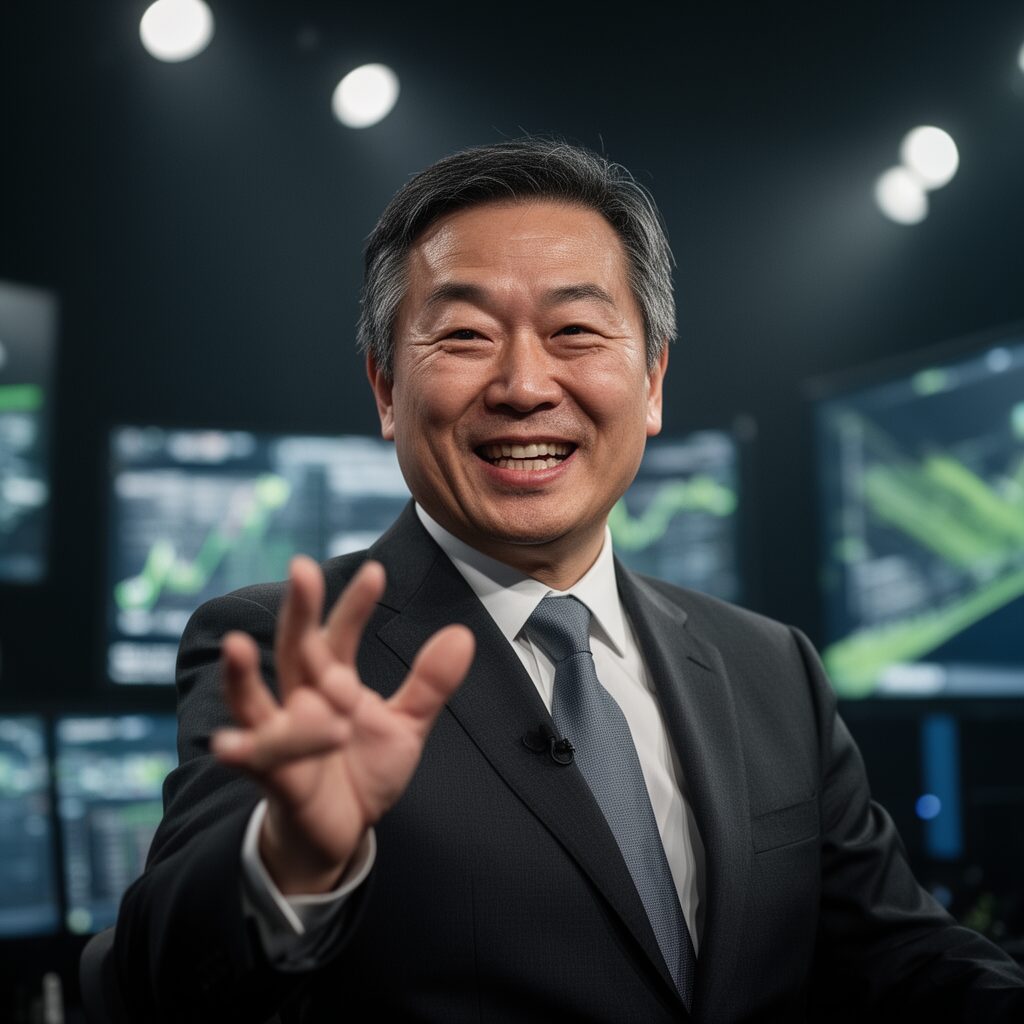
Nvidia’s chief executive, Jensen Huang, has been on an energetic world tour as the company’s share price has soared. Photograph: Evelyn Hockstein/Reuters
Nvidia is, in crucial ways, nothing like Enron – the Houston energy giant that imploded through multibillion-dollar accounting fraud in 2001. Nor is it similar to companies such as Lucent or Worldcom that folded during the dotcom bubble.
But the fact that it needs to reiterate this to its investors is less than ideal.
Now worth more than $4tn, Nvidia makes the specialised technology that powers the world’s AI surge: silicon chips and software packages that train and host systems such as ChatGPT. Its products fill datacentres from Norway to New Jersey.
## The Start of Concerns
This year has been an exceptional one for the company: it has struck at least $125bn in deals, ranging from a $5bn investment into Intel – to facilitate its access to the PC market – to $100bn invested in OpenAI, the startup behind ChatGPT.
Even as those deals have fuelled surging stock prices and paved the way for chief executive Jensen Huang’s energetic world tour, doubts have emerged about how Nvidia does business, especially as it has become increasingly central to the health of the global economy.
## Doubts About Nvidia’s Deals
The start of these concerns has been the circular nature of many of its deals. These arrangements resemble vendor financing: Nvidia lending money to customers so they can buy its products.
The largest of these is its deal with OpenAI, which involves Nvidia investing $10bn into the company each year for the next 10 years – most of which will go to buying Nvidia’s chips. Another is its arrangement with CoreWeave, a company that provides on-demand computing capacity to big AI firms, essentially leasing out Nvidia’s chips.
James Anderson, a renowned tech investor, describes himself as a “huge admirer” of Nvidia, but said this year that the OpenAI deal presented “more reason to be concerned there than before”.
## High-Profile Deals
There is also a deal with CoreWeave where, along with a commitment to buying $22bn of data centre capacity from the cloud provider, OpenAI is receiving $350m in CoreWeave stock.
Nvidia has aggressively rebutted suggestions of any similarity with Lucent Technologies, a telecoms company that also aggressively lent money to its customers, only to overextend itself and unravel in the early 2000s.
All these moves form part of OpenAI’s $1.4tn bet on computing capacity to build and operate models that, it argues, will transform economies – and make back that expenditure.
## Nvidia’s Deals at a Glance
Investment in Nvidia chips, GPUs, processors
Nvidia’s sprawling partnerships are driving extraordinary growth but also bank its future on the AI boom paying off quickly.
Nvidia’s chief executive, Jensen Huang, has been on an energetic world tour as the company’s share price has soared. Photograph: Evelyn Hockstein/Reuters