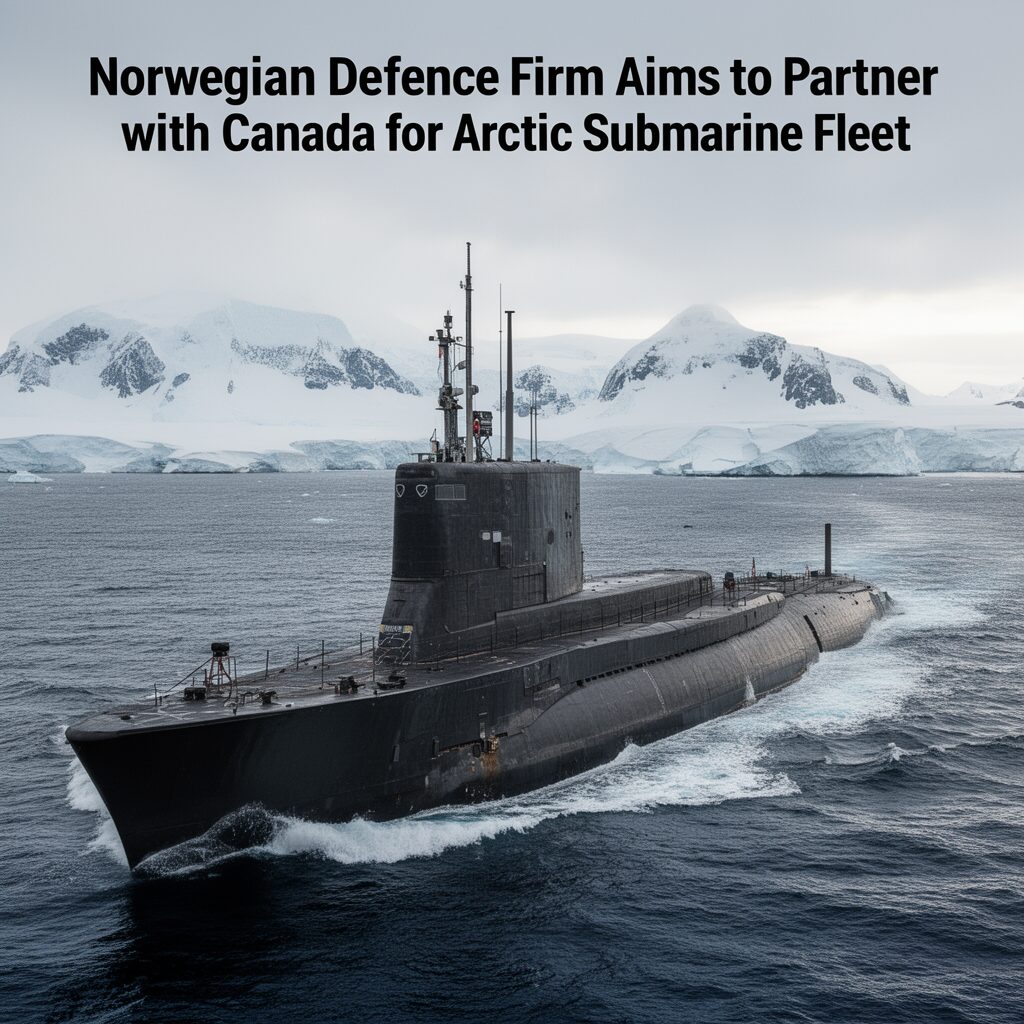
As Canada seeks to modernize its submarine fleet, a Norwegian defence company, Kongsberg, has stepped into the spotlight, presenting itself as a viable Arctic partner. With the competition for a lucrative multi-billion dollar submarine contract heating up, Kongsberg is aligning itself with Germany’s ThyssenKrupp Marine Systems (TKMS) to offer advanced submarine capabilities that can navigate the challenging Arctic environments.
## A Unique Arctic Partnership
Kjetil Myhra, the executive vice president of defence systems at Kongsberg, emphasized the cultural and geopolitical ties between Norway and Canada. He humorously noted, “We like to lose to Canada in ice hockey. It’s one of the countries we like to lose to.” This jest underscores the shared interests between the two Arctic-centric nations, both members of NATO, which makes their collaboration appealing. Kongsberg has invested significant resources into developing advanced technologies, especially seabed surveillance systems that can function in the harsh Arctic conditions. They are also in discussions with Canadian firms to create partnerships that align with mutual strategic goals.
In this context, Kongsberg and TKMS are not just offering submarines; they are inviting Canada to join an exclusive ‘sub club’ aimed at countering Russia’s maritime activities in northern waters. Kongsberg’s combat system, ORCCA, is already integrated into the TKMS 212CD submarines, showcasing a seamless operational capability that Canada could benefit from if they secure the contract.
## The Race for New Submarines
Canada is in a race against time to replace its aging Victoria-class submarines, with plans to retire them by 2035. Currently, only one of these submarines is operational, highlighting the urgency of the situation. Ottawa aims to procure a new fleet of up to 12 submarines from foreign suppliers, having narrowed down its options to TKMS and South Korea’s Hanwha Oceans.
As Kongsberg’s executives engage with Canadian defence officials in Ottawa and Halifax, they are reinforcing their commitment to long-term partnerships. Kongsberg has a long-standing presence in Canada, having collaborated with the Royal Canadian Navy on various projects, including outfitting River-class destroyers with essential technology and negotiating the procurement of joint strike missiles for Canada’s upcoming F-35 fleet.
Kongsberg’s strategy includes refurbishing a facility in Newfoundland to manufacture training simulators, indicating a commitment to creating sustainable jobs in Canada rather than temporary positions tied to specific programs.
## Competing Offers from Hanwha
While Kongsberg and TKMS position themselves as premier candidates, South Korea’s Hanwha is making its own aggressive moves to win over Ottawa. Hanwha is marketing its KSS-III submarines, which are touted to be larger and could be delivered more rapidly than competing options. Industry Minister Mélanie Joly recently toured Hanwha’s Geoje shipyard and inspected their submarines, signalling the government’s serious consideration of their proposal.
Joly’s visit is part of a broader initiative to foster substantial investments in Canada’s defence sector, following Prime Minister Mark Carney’s own visit to observe Hanwha’s manufacturing capabilities. Meanwhile, Hanwha has been actively forming cooperation agreements with Canadian firms, including Babcock Canada and PCL Construction, to strengthen its bid.
The submarine procurement project is a high priority for the Canadian government and is among the first projects managed by the newly established Defence Investment Agency, which aims to streamline significant military purchases. The government is advancing the project rapidly, with goals to finalize a contract by 2028.
## A Sensitive Procurement Process
The Canadian government has taken steps to ensure the procurement process remains confidential due to national security concerns. Bid instructions sent to the two submarine manufacturers on November 14 are not public, but they are expected to guide the firms in shaping their proposals regarding economic and strategic value, platform operations, and maintenance.
According to sources familiar with the process, long-term maintenance will be a critical factor in evaluating bids, with sustainment accounting for half of the scoring criteria. As Canada moves forward with this significant defence acquisition, the stakes are high, and the interest from international partners reflects the strategic importance of the Arctic region.
In conclusion, as Canada navigates its options for a new submarine fleet, the involvement of companies like Kongsberg and Hanwha highlights the global competition for this crucial contract. With the Arctic becoming increasingly vital in terms of security and strategic interests, the choice of partner could shape not just military capabilities but also economic and diplomatic ties in the years to come.