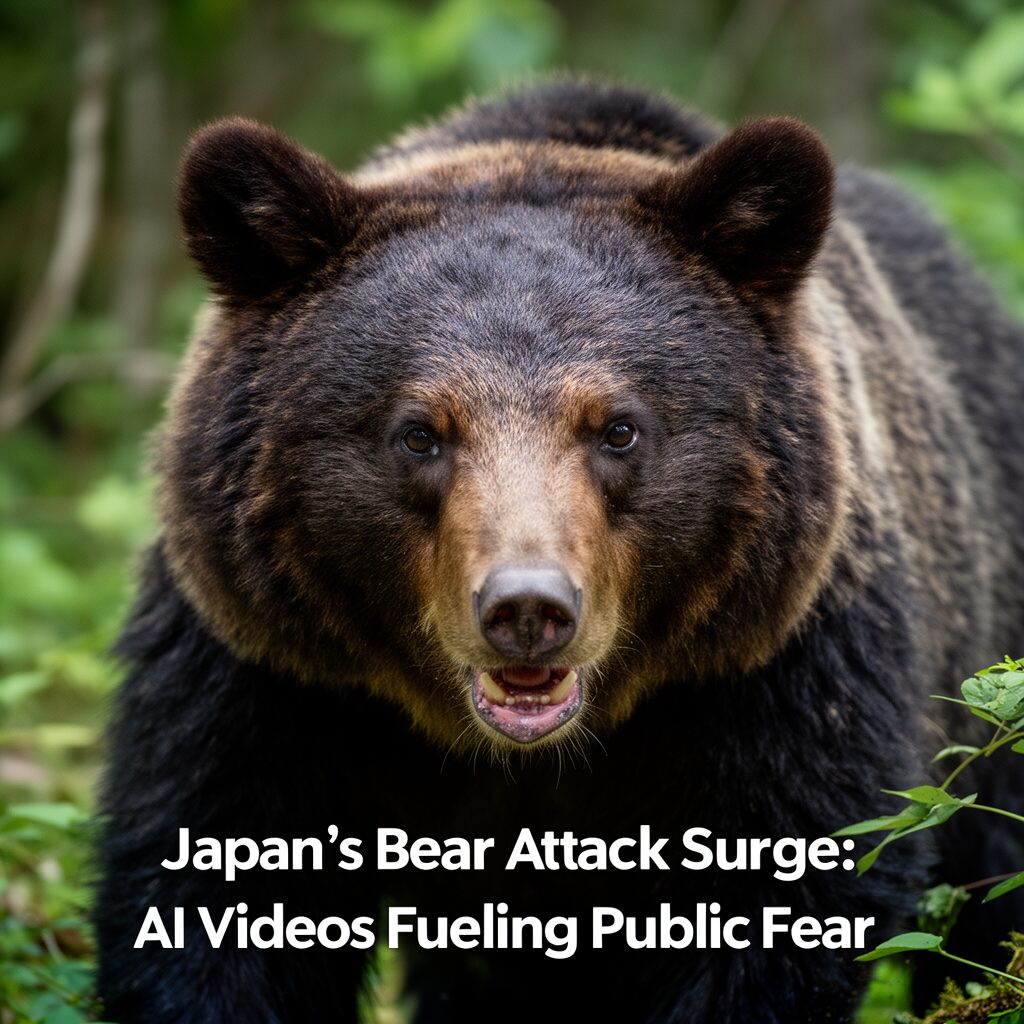
## The Rising Fear of Bear Encounters
In Japan, the fear of bear encounters has reached unprecedented levels. With a record number of fatal bear attacks reported this year—13 deaths and over 100 injuries—concern among residents is mounting. But alongside real threats, a troubling trend has emerged: a flood of AI-generated videos that portray bears in alarming scenarios. These videos, which many struggle to differentiate from reality, are adding to an already anxious public.
## Distinguishing Fact from Fiction
Social media, particularly TikTok, has become a breeding ground for these realistic yet fake videos. Clips show everything from bears wreaking havoc at solar farms to schoolgirls bravely defending themselves against the hulking animals. Experts warn that these portrayals not only heighten anxiety but also risk spreading misinformation about bear behavior. In reality, engaging with bears can be extremely dangerous. Black bears in Japan can weigh up to 130 kg (287 lbs), while Ussuri brown bears can reach a staggering 400 kg (880 lbs).
The danger is compounded by the fact that these AI-generated clips often contain elements that make them seem authentic. For instance, some videos reference specific locations where bear sightings have been reported. One clip even featured a fabricated news report about a bear entering a convenience store, which local officials quickly debunked.
## The Real Threat of Bear Encounters
Experts believe that the surge in bear sightings is tied to food shortages caused by poor acorn and beechnut crop yields. As these bears venture into residential areas in search of food, the risk of encounters with humans increases. Unfortunately, some videos even depict individuals feeding bears, which is a behavior that can lead to dangerous consequences. Shinsuke Koike, a professor at Tokyo University of Agriculture and Technology, emphasizes that feeding bears can eliminate their natural fear of humans, further exacerbating the risk of attacks.
The Japanese government has issued guidelines on how to behave during bear encounters, but misleading videos might undermine these essential messages. As the number of fake videos continues to rise, residents are left grappling with real fears and false narratives. Over 20,700 bear sightings were reported nationwide from April to September—7,000 more than the previous year—making it all the more critical to rely on accurate information.
## Impact on Daily Life
The presence of bears has disrupted daily life in northern Japan, especially in areas like Akita Prefecture, where government responses have included deploying self-defense forces to manage bear populations. Companies like Japan Post and NTT East have altered their operations to ensure worker safety, highlighting the tangible impacts of this bear encounter crisis.
The alarming increase in bear attacks, coupled with the proliferation of AI-generated videos, creates a perfect storm of anxiety for the public. As residents navigate their fears, it is crucial for them to differentiate between real threats and fabricated content, ensuring that they remain informed and safe. In this age of misinformation, staying aware and educated about the reality of bear encounters is more important than ever.