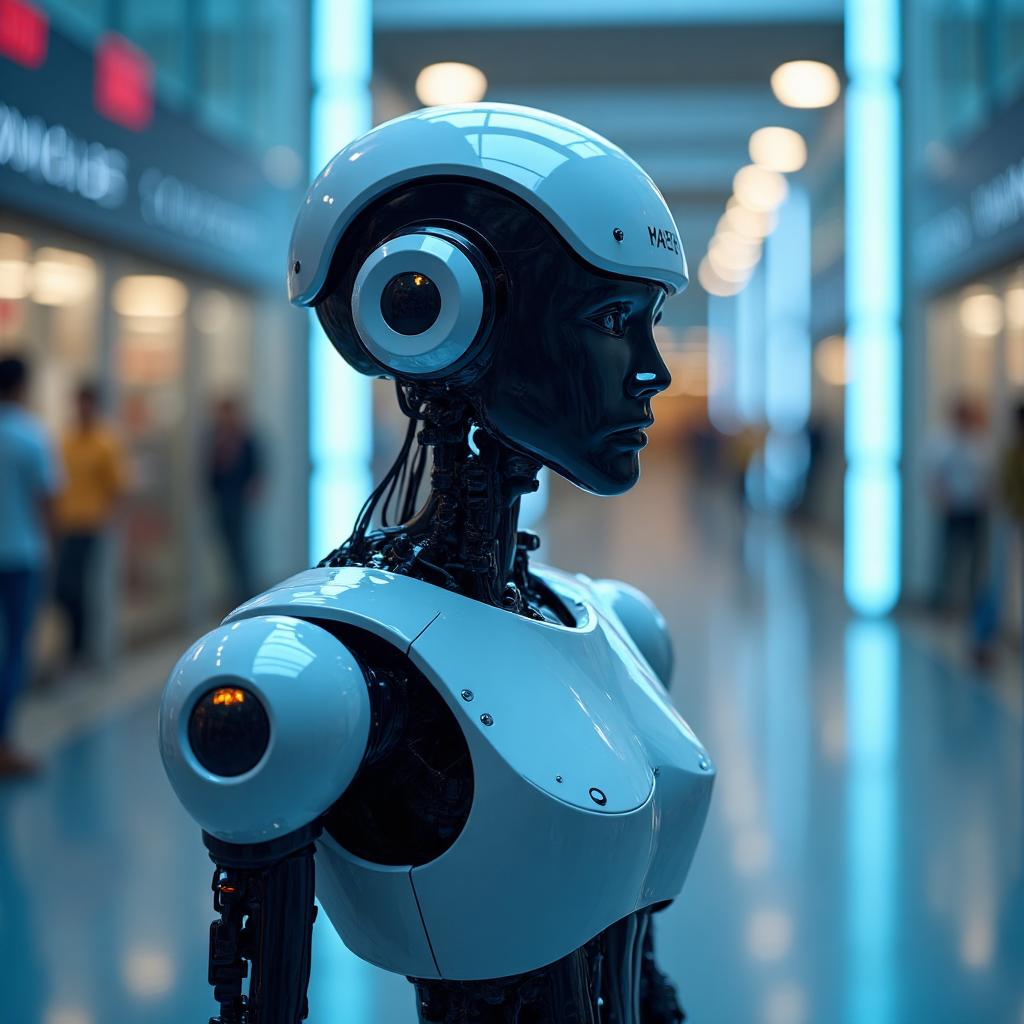
Imagine a future where robots seamlessly navigate complex environments, all without relying on constant cloud connectivity. That future is closer than you think, thanks to a collaboration between Hyundai Motor, Kia’s Robotics LAB, and AI semiconductor company DEEPX. They’re on the cusp of commercializing a next-generation on-device AI robot platform poised to transform industries.
This groundbreaking platform marks a pivotal shift toward ‘Physical AI,’ enabling robots to operate autonomously and efficiently in a wide array of scenarios. Let’s dive into what makes this innovation so exciting.
## Powering Autonomy with On-Device AI
At the heart of this platform is DEEPX’s DX-M1 NPU (Neural Processing Unit). This ultra-low-power chip has been instrumental in Hyundai and Kia’s robot development since 2023, offering impressive performance while consuming less than 5W of power. Its low latency and efficiency make it perfect for robots operating under strict power and thermal constraints, whether they’re indoors or outdoors.
The integration of the DX-M1 with a dual wide- and narrow-angle ISP camera system and the Robotics LAB’s proprietary vision AI technology has resulted in a robust controller architecture. This allows robots to function reliably even in network-restricted environments like underground facilities, transportation hubs, and logistics centers. No more dependence on spotty Wi-Fi!
## Facey and the Future of Service Robots
Beyond navigation, the DX-M1 also powers _Facey_, the LAB’s facial recognition system. This technology is already integrated into the **DAL-e Delivery** robot, enabling it to authenticate recipients, identify users, and guide interactions. These capabilities are just the beginning, paving the way for even more advanced service robot functions.
The platform will be showcased at major industry events, including **CES 2026** in Las Vegas. This collaboration signifies a long-term commitment to expanding Physical AI across various sectors, from manufacturing and logistics to mobility and smart cities. The collaboration aims to accelerate the development of more sophisticated and versatile robots.