Have you ever wondered how technology can revolutionize the way we diagnose and treat life-threatening medical conditions? A recent study published in the journal Nature Communications has shed light on the potential of AI-powered electrocardiogram (ECG) alerts in detecting and treating hyperkalemia, a serious condition that can be fatal if left untreated.
## The Rise of AI in Healthcare
In recent years, the healthcare industry has witnessed a significant shift towards the adoption of artificial intelligence (AI) and machine learning (ML) technologies. These technologies have the potential to transform the way we diagnose and treat medical conditions, making healthcare more efficient, accurate, and patient-centric. One of the most promising areas of AI application in healthcare is in the field of electrocardiography (ECG).
## The Problem with Hyperkalemia Detection
Hyperkalemia is a life-threatening condition that occurs when the potassium levels in the blood become too high or too low. It can be caused by various factors, including kidney disease, medication, and electrolyte imbalances. Detecting hyperkalemia early is crucial, as it can lead to cardiac arrhythmias, heart failure, and even death. However, traditional methods of detecting hyperkalemia, such as blood tests and ECGs, can be time-consuming and prone to errors.
## The Solution: AI-Powered ECG Alerts
Enter AI-powered ECG alerts, a revolutionary technology that uses machine learning algorithms to analyze ECG data and detect hyperkalemia in real-time. A recent study published in Nature Communications demonstrated the effectiveness of AI-powered ECG alerts in detecting and treating hyperkalemia. The study, which involved 70 emergency physicians and 14,989 patients, showed that the AI-powered ECG alert system significantly improved the timely treatment of hyperkalemia among high-risk patients.
The AI-powered ECG alert system works by analyzing ECG data and categorizing patients at risk of moderate-to-severe hyperkalemia or hypokalemia. The system then sends a pop-up alert to the physician’s electronic health record, alerting them to the potential risk and providing guidance on suitable treatment. The study found that the AI-powered ECG alert system was able to detect hyperkalemia more accurately and earlier than traditional methods, resulting in faster treatment and improved patient outcomes.
## Conclusion
The study’s findings are a testament to the potential of AI-powered ECG alerts in revolutionizing the way we detect and treat hyperkalemia. As the healthcare industry continues to evolve, it is likely that we will see more adoption of AI-powered technologies in the field of ECG analysis. With its potential to improve patient outcomes, reduce healthcare costs, and enhance the efficiency of healthcare systems, AI-powered ECG alerts are an exciting development that holds much promise for the future of healthcare.
## Featured Image Suggestion
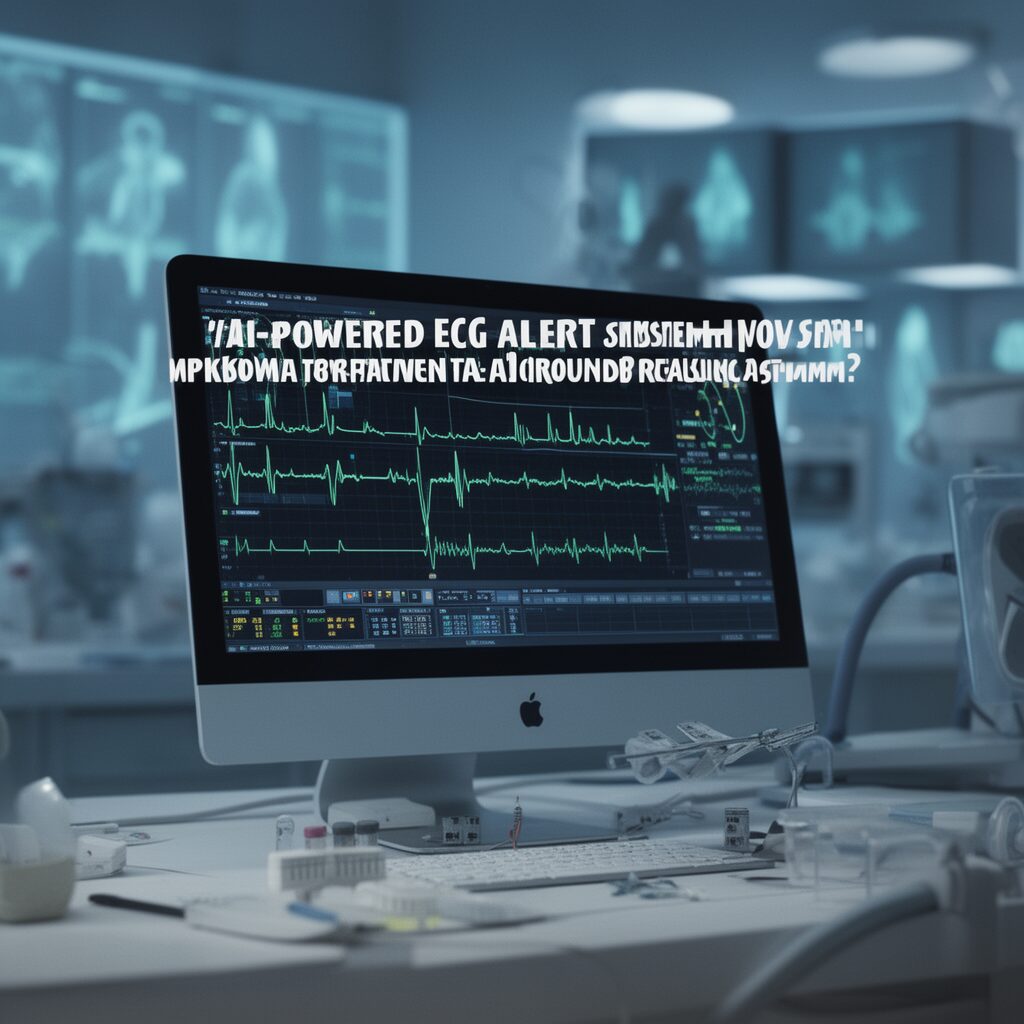
The ideal featured image for this article would be a visually striking representation of the concept of AI-powered ECG alerts. Here’s a possible description of the image:
The image would feature a futuristic, high-tech medical lab setting with a large screen displaying a real-time ECG reading. In the foreground, a doctor or nurse would be depicted wearing a sleek, high-tech headset, analyzing the ECG data on the screen. The background would feature a cityscape or a hospital setting, conveying the idea of a cutting-edge medical facility. The color scheme would be a blend of calming blues and whites, with bold accents of orange or red to represent the alerts and notifications. The mood would be one of futuristic optimism, conveying the idea that technology is revolutionizing the way we diagnose and treat medical conditions.