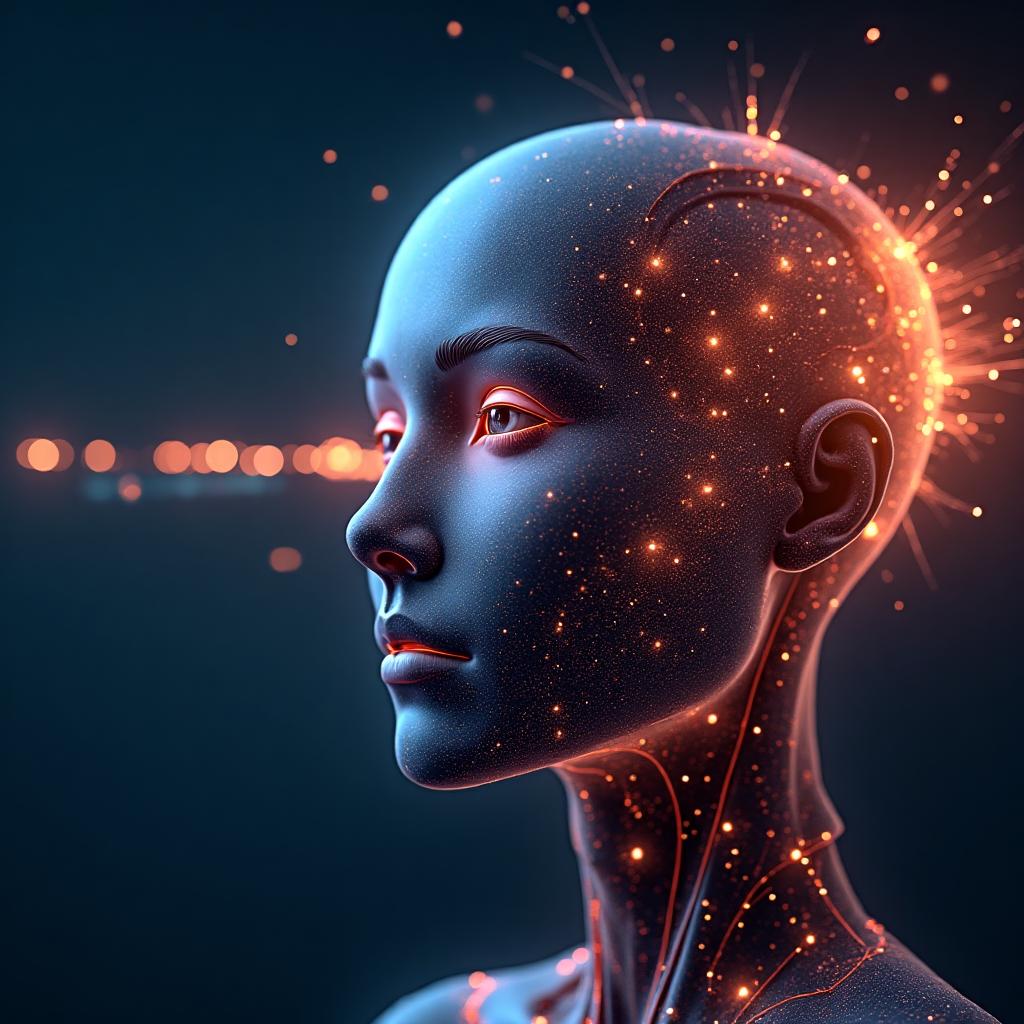
Imagine AI processing information at the speed of light. No, this isn’t science fiction anymore! Scientists have just announced a groundbreaking advancement that eliminates a significant bottleneck in AI computing, paving the way for dramatically faster and more efficient artificial intelligence. This breakthrough could revolutionize everything from self-driving cars to medical diagnoses. Get ready for the future, because it’s arriving faster than ever.
The researchers have effectively tackled a major hurdle in AI development: the energy-intensive and time-consuming process of moving data between the processor and memory. Current AI systems spend a huge amount of energy and time shuffling data back and forth, slowing down the entire process. This limitation has been a critical constraint on the capabilities and scalability of AI.
## The Speed of Light Advantage
So, how did they achieve this remarkable feat? The innovative approach involves using light – specifically, photonics – to perform calculations. By encoding data onto light waves and manipulating them through specialized optical circuits, researchers can perform complex mathematical operations almost instantaneously. This method significantly reduces the energy consumption associated with traditional electronic computing, making AI systems more energy-efficient and environmentally friendly.
## Implications for the Future of AI
This light-speed processing capability opens up a wealth of possibilities. Imagine self-driving cars making split-second decisions with perfect accuracy, or medical AI systems diagnosing diseases with unprecedented speed and precision. This technology also has the potential to accelerate scientific discovery, enabling researchers to analyze massive datasets and uncover hidden patterns much faster than before.
## Overcoming Limitations
While this advancement is incredibly promising, it’s important to note that further development is still needed. Scaling up the photonic computing technology to handle the complexity of real-world AI applications will be a significant challenge. However, this breakthrough represents a major leap forward and a significant step towards unlocking the full potential of artificial intelligence. The future of AI is bright – literally! Keep an eye on this space, because the light-speed revolution has only just begun.