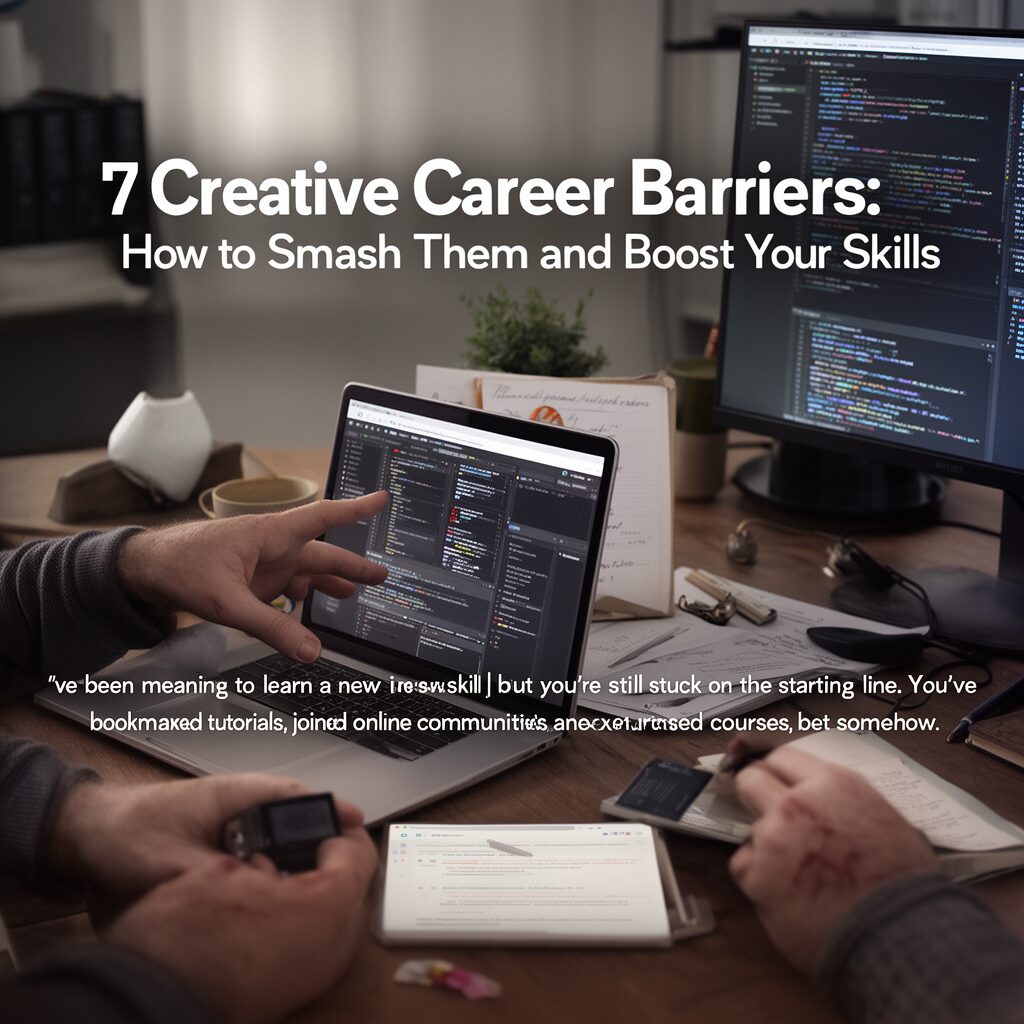
Imagine you’ve been meaning to learn a new skill for years, but you’re still stuck on the starting line. You’ve bookmarked tutorials, joined online communities, and even purchased courses, but somehow, you just can’t seem to get started. Sound familiar? As creatives, we face unique obstacles when it comes to learning new skills. We know we should stay up-to-date to remain relevant in our industry, but often, we let fear, self-doubt, and procrastination hold us back.
## Perfectionism Paralysis: When High Standards Hinder Progress
If you’re a creative professional, you have high standards. You know what good work looks like. Clients trust you. Your portfolio is solid. But when you try to learn something new, suddenly, your output doesn’t match your expectations, and that gap can feel unbearable. I once spent six hours trying to make my first After Effects animation look professional, but it still looked like it had been made by someone who’d used After Effects for six hours. Which, of course, it had.
The solution? Give yourself explicit permission to make bad work. Not ‘rough’ work; genuinely terrible work. Set a goal such as: I will make five embarrassing animations or 10 objectively bad designs. This isn’t client work or portfolio work; it’s practice. And practice is supposed to look bad.
## The Billable Hours Trap: Why Freelancers Struggle to Learn
For freelancers, every hour spent learning is an hour you’re not billing, pitching, or shipping. Compared to people in salaried roles, there’s pressure to always be ‘productive.’ So learning gets framed as a luxury; something you’ll do ‘once things calm down.’ Spoiler alert: things never calm down.
To overcome this, treat learning like a business investment, not a hobby. Block out non-negotiable time in your calendar and protect it like a client meeting. Spending four hours a month learning might ‘cost’ you now, but it could unlock much higher-value work later.
## Imposter Syndrome: When Learning a New Skill Feels Like a Threat to Your Identity
Creative people already struggle with imposter syndrome. Learning a new skill cranks it up to 11. You might be a senior designer who’s suddenly slower than a teenager or a seasoned writer whose first video edit looks… tragic.
To separate your professional identity from your learning identity, remember that you’re not ‘a designer who’s bad at animation.’ You’re a designer and a beginner animator. Those can coexist. Seek out beginner spaces (courses, forums, Discords) where struggling is normal.
## The Tutorial Loop: When Watching Tutorials Becomes a Hindrance to Progress
Watching tutorials feels productive. You’re learning terminology, seeing workflows, nodding along. But often, you’re not actually building the skill; just the comforting illusion of progress.
To overcome this, set a strict ratio: for every hour of tutorials, spend at least two hours making something. Better yet, watch 10 minutes, pause the video, and recreate what you just saw from memory. It’s uncomfortable and messy, but can be wildly effective.
## Comparison and Instagram Anxiety: When Social Media Sabotages Your Momentum
You open Instagram for ‘a quick break’ and see someone younger, better, and wildly accomplished at the exact skill you’re learning. They have an insane number of followers. Their work is flawless.
To overcome this, mute or unfollow people who are brilliant at the skill you’re learning. Yes, really. You can re-follow them later.
## Choice Paralysis: When Too Many Options Hold You Back
Should you learn Webflow or Framer? After Effects or Premiere? Strategy or service design? With so many options, the fear of choosing wrong often stops you from choosing at all.
To overcome this, ask yourself one simple question: which skill will make my next project easier or more interesting? Not your dream job in five years; your actual, real next project. Then commit for three months. Mute keywords, delete bookmarks, unsubscribe from adjacent newsletters.
## The ‘It’s Too Late’ Mentality: Why You’re Not Too Old to Learn
Creative professionals are especially vulnerable to this kind of thinking, because our field skews so young. But here’s the truth: you’re not competing with 23-year-olds. You’re building on a foundation of experience they don’t have. That combination is actually more valuable than either skill in isolation.
So, the next time you’re tempted to put off learning a new skill, remember that it’s never too late. You don’t have to be perfect. You don’t have to be faster or better than everyone else. You just have to be willing to start, learn, and grow. And that’s a skill we can all develop.